Apple Podcasts

 Spotify

 Overcast

 PocketCasts

 Podcast Addict

 iHeartRadio

 Amazon Music

 Castbox

 Podchaser

 RSS Feed
E332 Fury in Few Explores the Cost of Chasing Your Dreams on Their Debut Album How Bad Do You Want It?
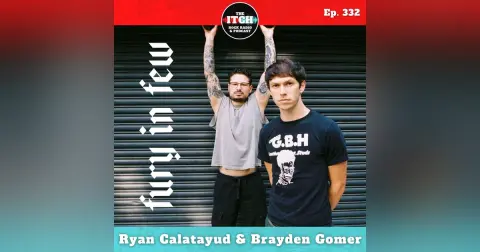
This week, we're scratching The Itch to be dangerous! Brayden and Ryan of Fury in Few are back to answer the question How Bad Do You Want It? on their outstanding debut album. The guys take us on a track-by-track journey through the record, exploring their methods of adding "character" to songs, stretching themselves sonically to make the music they truly want, and how they're making social media work better for them without becoming part of the content creation machine.
Plus, we'll discuss the song on the album that isn't theirs and get excited about chain sandwich shops, all while Dan does the interview ... concussed? Enjoy.
Listen to The Itch Rock Radio Show Rock with us every Sunday night from 6-9pm CST on KCLC-FM in St. Louis. Outside the area? Stream online at 891thewood.com, TuneIn, Radio.net, and OnlineRadioBox!
Connect With The Itch For any and all friendship, questions, inquiries, and offers of pizza, The Itch can be found at the following: Website: itchrocks.com Facebook: Facebook.com/itchrocks Instagram: Instagram.com/itchrocks Email: itchrocks@gmail.com
Support the Show Thank you so much for listening. If you like what you hear, please subscribe and leave a positive review and rating on Apple Podcasts, Spotify, or Podchaser to help our audience grow. Reviews only take a minute and help us reach more rock fans just like you.
Credits Our theme song, "Corrupted", is used with permission from the amazing Skindred. All other content is copyright of The Itch. All rights reserved, including the right to rock on.
Brayden Gomer: I'm Brayden.
Ryan Calatayud: I'm Ryan.
Brayden Gomer: We're Fury in Few, and you're listening to The Itch.
KC: You're listening to The Itch. My name is KC.
Dan: My name is Dan.
Aaron: And I'm Aaron, and this week we are scratching The Itch to be dangerous, because our guests are Brayden and Ryan of Fury in Few returning after a two and a half year— we're going to call it an absence. They were just completely gone. We don't know what happened to them in that time. But in preparation for this interview, Dan decided to really live into the danger and seems to have given himself a concussion on his garage door this morning. So that'll be another first for The Itch.
Dan: Yes. How bad do you want this interview? Bad enough to do it while concussed.
Brayden Gomer: I see what you did there.
Ryan Calatayud: Yeah, I see.
Aaron: So, thank you guys. We are super happy to have you guys back on, and we're super excited that your album is about to come out that we're gonna chat about today.
Brayden Gomer: Yeah, thank you for having us, man. We appreciate y'all. And yeah, that was more of a sabbatical we were on. We needed a two and a half year break from you guys after the first one, it was so traumatic.
Aaron: So many guests do that. They just— some bands just break up entirely after they're on the show.
Brayden Gomer: We thought about it after the interview, the first one. I don't know, you know, they liked each other too much.
Aaron: They're just too good of pals to go all the way to breaking up.
Brayden Gomer: So yeah, our friendship couldn't reach your guys' heights and we knew it. So we're just like, this isn't even worth it anymore.
KC: Well, our first conversation was episode 197, and one of the things that was discussed in that conversation was that it wasn't worth the return to put out an album if it wasn't all bangers. Well, now that you've gone and done it, we thought it'd be fun to spend a little time discussing each song.
Brayden Gomer: Is that what we said? We're gonna have to take that back.
Ryan Calatayud: Some bangers?
Brayden Gomer: No.
Ryan Calatayud: A few bangers?
Brayden Gomer: Yeah, what if it's like three? Does three count? Is that cool?
Aaron: Well, you guys were talking about how— because previously you mostly released EPs and so we were talking about, okay, what's the motivation to release a full album? And you're talking about how it's really not worth your time. Like, if you only have an EP's worth of good stuff, then just put that out instead of filler and fluff, right?
Brayden Gomer: Yeah, we took that all back.
Ryan Calatayud: Yeah.
Brayden Gomer: A lot of fluff on this record.
Aaron: Well, let's hope not, but we'll find out. I guess we will go down that road together and see. So the new album is called How Bad Do You Want It?, and we talked a little bit about this in kind of pre-gaming. My immediate interpretation in hearing it was that the album title kind of acts as like the question that most of the songs are sort of trying to answer. And so the majority of the record seems to be an exploration of like, here's the cost of following your dream to be a musician and all the difficulties and the nonsense that comes along with it.
Ryan Calatayud: For sure.
Aaron: If you guys are ready, we figure we can take some time to find out if I completely missed the mark on that interpretation or not.
Brayden Gomer: Yeah, absolutely. No, I already like that. I think that's really cool for sure. Totally.
Dan: So, I have a question because one of my favorite videos of yours on social media is the one where basically it's Brayden showing that he does like guitar, everything, and then Ryan drums, still drums. So I'm curious, did Ryan do anything besides drums on this album before we get into it?
Ryan Calatayud: Maybe. I have like a backing vocal in there somewhere. Maybe a gang vocal part where there's like 20 voices and I'm one of them. That's, I think, the extent besides drums.
Brayden Gomer: His answer is pretty much yeah.
Ryan Calatayud: Hey!
Dan: Still drums. That's all right.
Aaron: There's definitely a little— a few like background yells, a little bit of that Cake thing, you know, where like there's just people saying stuff at different points in the song.
Brayden Gomer: Oh, yeah. You need one background vocal within a group of people, Ryan's your guy.
KC: Yeah.
Brayden Gomer: Yeah, you need one of one of ten. He's one.
Ryan Calatayud: Facts.
Brayden Gomer: He's one.
Ryan Calatayud: One of ten.
Brayden Gomer: That's a fact for sure.
Dan: So we'll start with the first track of the album, Death in a Parking Lot. And I'm really curious because it— the beginning song starts off with a clip. I believe it's Ryan being like, "Hey, can you do a riff that sounds like da da da," and then you bust into this riff. So I'm really curious. Did we get a sneak peek into Fury in Few's writing process in the intro of this song?
Brayden Gomer: Yep, that's exactly how it goes, actually, the whole thing. No, um, I think that was— that was Ryan's big contribution besides drums.
Dan: Yeah.
Brayden Gomer: So, he spoke on the thing, and then we were like, okay, you're good now, you just play drums and we don't— yeah, otherwise we have to pay him overtime because that's how he works. So yeah, that was— that's a good summation.
Aaron: Yeah, I thought you were gonna say all songs start with Ryan just making up a riff and then vocalizing it, and you figure it out from there. That would have been— no, this is how we work. He won't bother learning the guitar, but he's got the riffs all here.
Brayden Gomer: Yeah, translate them. Usually it's the opposite. Normally it's a singer going like, can you do a drum beat kind of like boop boop bah boop boop boop bah? Yeah, we do it the opposite way.
Aaron: So I'm curious, I mean, let's talk a little sequencing on that one if we can. Like, why is that the lead for the album?
Brayden Gomer: I mean, I think that song, I believe it was like the first one that we really like when we wrote it. It was very much like, yeah, that's gonna go on something. Like, because funny enough, most of the songs on this record, not even most, maybe like half or like four of them, we didn't even know we were gonna make a record when we started writing. We just kind of were writing some songs, and then our manager called us and told us we had to make a record. We were like, oh, okay, but we only have like four songs. And he was like, well make more. And we're like, okay. It was just one of those conversations where it was like, I think it's time and all that. That's a whole nother thing. But when Death in a Parking Lot, when we did it in the practice space, that was like the easiest one to be like, yeah, that's a Fury in Few song. That's pretty much cut and dry, done. It didn't even really take that long to write, honestly.
Ryan Calatayud: Nope.
Brayden Gomer: I showed him the riff, or in the skit he shows me the riff, and then we kind of just like, we had the chords ready to go. I think we added like the bridge in the space, and then we were like, yeah, that's done, easy, finished. So we thought it would be very appropriate for the easiest song to be the first song because it just felt so natural and so good.
KC: Fair enough.
Aaron: Worth noting that KC and I ran into your manager about a year ago.
Brayden Gomer: I'm sorry.
Aaron: He told us, because, as with many records, this thing has been at least on some level finished or mostly finished for a while.
Ryan Calatayud: For sure.
Aaron: He told us it was his favorite record that he had heard of the year, and this was without Ryan and Brayden anywhere in earshot or anything like that. So I don't believe that he was just bluffing or trying to sell us something.
Brayden Gomer: He's scared now secretly.
Ryan Calatayud: He had just gotten his Christmas bonus and he was like, yeah, this album's amazing.
Brayden Gomer: Let me tell you, these guys are going places.
Aaron: So we've been waiting a year to like find out if he was right.
Brayden Gomer: You still have not confirmed nor denied yet, technically.
Aaron: Well, we're only at the first song, so we've got a lot to go here.
KC: Yes. So up next, Smile Like Michael Shannon. So the obvious question to start off, how exactly does one smile like Michael Shannon?
Brayden Gomer: God, if this wasn't— if this was a video interview, I could explain it better.
Aaron: We could try. I mean, we could use some video.
Brayden Gomer: It's one of those— Smile Like Michael Shannon, how does one do it? In my opinion, Michael Shannon has like one of the most unique faces of a lot of actors, and there's a few movies that he's in where like he kind of does just smile, and for me it just gives me such an interesting, uneasy feeling.
KC: Fair enough.
Brayden Gomer: In a great way, like he does his role perfectly.
KC: Yeah.
Brayden Gomer: And so I don't know, it just stuck with me. And so when, when I was writing that song, it was just kind of like, I just envisioned his face. It was like, what a creep. He's so great.
Aaron: KC sent us some photos the other day of Michael Shannon's smile just as prep. But the smile was kind of unsettling. You're not wrong.
Brayden Gomer: Yeah, yeah. And that was one— I mean, talk about we didn't have enough songs. That song had technically been out for a little bit of time, and we just really enjoyed it a lot, and we thought it was great. We didn't think it got a fair shake by itself, so we were like, you know what, put it on the record because we like that song, we think it's good. And we released this single a while ago. It didn't do what we wanted it to. It didn't get its fair time in, its day in the sun. So we were just like, put it on the record.
Aaron: Yeah, agreed. I've also got to thank Ryan for sending us that one before it was released. We've been listening to that one a long time. A very long time.
Ryan Calatayud: Yeah, we got that one in the chamber for a minute.
Brayden Gomer: We did. Yeah, yeah, yeah. I think we wrote that one even in our old practice space. Those words, that's insane to think, but we did. Yeah.
Aaron: I'll probably come back to this later again because I think it's an interesting point, but touching on the little things that bands do that I think just add to songs, but people might not think about. Going back to the little bit about can you write a riff or whatever, and then the backing kind of shouts and those kind of things. I think one of my favorite parts of this song is there's this little chuckle that you do after the live, laugh, but never love me. And then it's like this like nervous laughter after it. And that's the kind of stuff that I feel like I want to hear more bands do, like just kind of insert something that's not a lyric in the song, but just a little bit that kind of adds— I don't even know what to call it—
Brayden Gomer: Ambiance or something to the song. Yeah, yeah, yeah, I agree. I think that's something that, you know, even with the beginning of Death in a Parking Lot, it's something where Ryan and I find a lot of fun in that too.
Ryan Calatayud: Yep.
Brayden Gomer: You can just have, like, a bunch of songs on an album and that's it, but it's the little things. I agree. I think it's the little things where you get to add your little piece of personality to it. I mean, a song is all personality if you do it right, but it's those little things where it's like, oh, okay, clearly they, I don't know, have a sense of humor. Or like, oh, I wonder what they were thinking when they did that part. Like, who thought of the laugh? Who thought to do it? Like, stuff like that that just— I think back in the day when albums came out and there wasn't social media all over the place and everything like that, I think when you would hear stuff like that, it was very much like— it almost brings up like a question of, why did they even do that? What was the purpose of that? And you kind of dwell on it, and then you kind of either learn to hate it or love it. And I think that's kind of cool.
KC: Yeah.
Aaron: So we had a guest on at the beginning of the year who talked about— there's a part in one of his songs where he literally starts his lyric early, and then it's like, oops, sorry, like pauses for a second, and they leave it in the song and he picks it up again. And we thought that was a great bit of character.
Brayden Gomer: That's awesome.
Aaron: But then there's also people— yeah, it was fun. And KC asked about that. I'm glad that he asked him whenever we talked to Micah about that. But then I also have heard stories about like somebody like Chino from Deftones where like every breath that you hear in a song is intentional and—
Brayden Gomer: He's breathy.
Aaron: Yeah, he's very breathy. It's orchestrated. Like, so there's stuff that just is a happy accident in the studio, and then there's stuff that's very deliberately planned, and it doesn't really matter to me either way, as long as it adds that character you're talking about.
Ryan Calatayud: For sure.
Brayden Gomer: Totally. Yeah. Yeah. There are people that could totally like— like formulas aren't a bad thing at all in that sense. Especially if it kicks ass like Deftones does. So if it ain't broke, don't fix it in a way. But, you know, at the same time, I think for Ryan and I specifically, especially being a two-piece, we're kind of forced to leave a lot of room for stuff when we write songs because it's really just, you know, in the room, guitar and drums at first.
Ryan Calatayud: And I mean, we have fun writing our songs. We're laughing. Like, we want our music to be a reflection of us. And it's like, yeah, we thought it was funny if we start off the whole album with me saying, you know, can you make a riff that sounds like this? And it's very authentic. So when we were coming out with the full-length, it was like, if we're gonna do it, we're gonna make it us. And stuff like that, it's cool that you guys picked up on. It's like, well, that's us. What you're hearing is what we think is cool or funny or both.
Brayden Gomer: Yeah, whatever makes us laugh or makes us like go oh, that's sick.
Aaron: Going back to that for a second, because I just realized this, the little bit at the beginning of Death in a Parking Lot, was that added on later on once it was decided that that was going to be the first track? Because you're like, this should also be the way the album opens, or was that kind of just always part of the song?
Ryan Calatayud: That was all like, it was kind of always—
Brayden Gomer: We like— it's kind of like I would have said, like, when we wrote Death, we kind of knew that was going to open the record.
Dan: Okay.
Brayden Gomer: Yeah, it was one of those where, well, we had the song written, I guess, and then technically that part, the talking part, came after, but it was like still like—
Ryan Calatayud: We had the idea before we had recorded it.
Brayden Gomer: Yeah, yeah, honestly. So we had an idea of like something being there, and that's kind of what we came up with.
KC: Right on. Up next is Honey Blood, and the interpretation I get from this is fame needs money.
Brayden Gomer: You know, fame does need money, doesn't it? Now more than ever, huh? Oh yeah, Honey Blood. Ryan loves this track, so I'm gonna let him talk about it.
Ryan Calatayud: Yeah, Honey Blood, of all of our— maybe all of our discography— is one of my, if not my favorite songs. I remember Braden showing it to me when we were in our little studio here at my house. And that's how we write, you know, most everything. Brayden will kind of hit me with an idea and we'll manifest it from there. But I just remember the second verse, I just thought was like so sexy. It was like, oh baby, please save me. I was like— I've never heard him— I mean, I've heard him write stuff like that, but nothing that was ever something that we considered for ourselves.
Brayden Gomer: Hmm.
Ryan Calatayud: And it really— he showed me that and I was like, oh, you've like leveled up. This is like— it's not Fury in Few from all of our other EPs. This is like what we've always wanted Fury in Few to be, which is like an amalgamation of all of our favorite music. And I'm definitely more hip-hop centered. And he played me that and I was like, dude, this is— yes, this is what I've been seeing us gravitating towards from the beginning. And like, the way the song built around that for me, I had no notes. I just remember being like, yes, whatever this is, that's what I want to do. And I think at the time when we had wrote it, we didn't have all this— these other songs. It was very different for us. And I was definitely like, oh wow, like, this kind of opens a new playing field for us. Like, this is sonically way different than like a normal-ish, like, 4/4 rock song. Like, this definitely has more elements of alternative than maybe we've done before. And I think that song, to me, was super pivotal in writing the rest of the album because I was like, oh, okay, we've proven with this song that we can do something different. And I think Michael Shannon was different than we've ever done either. The cadence of that is much more, like, hip-hoppy as well in that first verse. So when Braden started approaching me with these new songs for this album, I was like, oh yeah, this is something cool. Like, I see albums as a snapshot of where a band is like right then and there.
KC: Mm-hmm.
Ryan Calatayud: And a lot of my favorite bands, you can hear one line of a song and I could be like, oh, that's from that album. And I think that that second verse of Honey Blood was like, okay, this is gonna be, at least for me, it's my favorite. Like, this is my signature line of this album where I was like, okay, this is what I think we could do. It's still a rock song. Like, we didn't stray away from that, but it was definitely pushing ourselves sonically and melodically and lyrically into a new realm we've never been into. And that, I really like that song. The algorithm doesn't seem to like it nearly as much as me.
Brayden Gomer: Story of every band's life, right?
Ryan Calatayud: Like, if I was playing that song live also, that second verse is very thunderous. Tom heavy.
Brayden Gomer: Yeah. And we've been closing with it sometimes too.
Ryan Calatayud: Yeah, I just love that song.
Brayden Gomer: So yeah, I agree with Ryan. That was one of those ones where when I brought it to him, to be honest, for as sporadic as this record was to write, they all kind of came together pretty easily. And that was one of those ones that I showed it to Ryan and he really, like you said, had really no notes. And then we just kind of, in like an hour, we were like, all right, well, we got Honey Blood. Cool. Literally done.
Aaron: Awesome.
KC: Next up is Jake's Interlude. So who is Jake?
Brayden Gomer: I'll let Ryan take this one too.
Ryan Calatayud: So, it's one of our buddies, Jake. I think he just wanted me to call him Jake on it because I was like, do you want me to put your last name? Do you want to put like a tag or anything? He was like, nah, bro, just—
Brayden Gomer: Yeah, don't even give his last name.
Ryan Calatayud: Yeah, he was weird about it. I don't know. But I— Drake is an artist I really like, and he has interludes on a lot of his albums. And I've always like told Brayden, dude, if we ever do a full length, I think it'd be cool to have an interlude where it's not us, which Drake does a lot, where it'd be a song that he's not on. And his is to kind of pioneer artists that are smaller than him. He's done it with The Weeknd and other people. That's a whole nother thing. But yeah, our friend Jake is super talented with electronics, and me and him will jam, and he's super knowledgeable about synthesizers and all that. And he is one of my favorite people on the planet, actually. But we love Jake. He's an awesome, talented musician. And we had sent him Baja Nuclear Blast, and we're like, dude, I think it'd be cool to have something going from Honey Blood to this. You get like a minute or a minute and a half, I don't know how long it is, and just do whatever and just kind of transition these two songs. There's no rules.
Brayden Gomer: Yeah, we gave them free rein.
Ryan Calatayud: Like, if you sing on it, cool. If not, cool. Whatever you do, that's all you. So we, we had a couple versions of it. Me and Brayden didn't play anything on that. That's all our friend Jake. He did all the programming, all the sequencing, everything. And it's one of my favorite, aspects of the album. that we got to do something like that and we get to include someone, like him because he's one of our really good friends. And being in a two-piece is like the best worst thing ever because it's very— it's almost like super fraternal, where it's like if you're not in it, you're not in it. And Brayden plays, you know, all of the other instruments. We don't hire people, we don't contract anything out. So this was a cool way to kind of include someone else and let them have their flowers. This is— we're not on this. And it's— I think rock, that's something I'd like to see more of. And like, you know, LP 2 for Fury in Few, maybe— well, not maybe, it'll definitely be someone else if we have something like that. And I think it's just super fun. Even when I'm listening to it sequentially, I listen to it a lot at the gym and I'm like, man, Jake really snapped on this. And it just makes me smile.
Brayden Gomer: And it brings back that character thing too that we were talking about earlier. I think it just adds a personality and a character to it. And you might listen to it and go, I wonder why they even did that. And, you know, I just think that's always cool when you can leave people with questions like that. I'm like, I wonder why they even thought to do that, or who thought of it, or why.
Ryan Calatayud: Mm-hmm.
Brayden Gomer: So yeah, and we love that it's just Jake's interlude because like what you asked, people are gonna be like, who's Jake?
Aaron: Which makes the fact that he didn't give you a last name or a stage name or whatever that much funnier.
Ryan Calatayud: Yeah, I was like, dude, we can tag you or something when we release it. Like, do you want me to put @Jake, whatever? And he was like, nah.
Brayden Gomer: And for his privacy, we will not tell anybody.
Aaron: Anonymous interlude, basically.
Brayden Gomer: Yeah, that's right.
Ryan Calatayud: It is. I'm sure some Instagram deep divers could find him, but yeah.
KC: Yeah, that's awesome though.
Aaron: That is great. I was— that was going to be my note, was like, interludes are not a thing you see much in rock, and I appreciate that, that it's here. So the whole backstory makes it even that much better. I wouldn't have known.
Brayden Gomer: So, well, we wouldn't have told you.
Aaron: But then there's— yeah, it's very secretive then. Well, as you noted, that transitions right into Baja Nuclear Blast, which is my favorite song title, even though I'm not really a fan of the Dew.
Ryan Calatayud: What?
Brayden Gomer: This interview's over.
Dan: Terrible, isn't it?
Brayden Gomer: Yeah. What?
Ryan Calatayud: Who let this happen?
Aaron: Yeah, one of those Taco Bell originals. That's what that was. But I get it. You guys are on the road a lot at late hours. I'm sure that the Dew happens frequently.
Brayden Gomer: It's blue like water, so it counts. That's the rule.
Aaron: This is actually the one that we had the most little notes about because it felt like a good place to dive into what it seems to be about, or at least in one element of it's about, is that the necessary evil of social media and whatnot, as anybody, especially somebody who's an artist of any type trying to make it out there. And the idea of that dichotomy of needing to be likable and to be liked on the internet, but also feeling like you're begging somebody for attention and love.
Brayden Gomer: That's interesting. Oh yeah, yeah, yeah. I mean, I think that's something. I mean, it's 2026 and that's the thing that really, whether you run a bakery or a band or a podcast or an independent movie theater or you name it. There's this weird thing now for, I'd say, a majority of those businesses and those entities of you have to try and be loved by people in some way, shape, or form, whether it's through humor or it's through shock value or it's through just a declarative statement or something. So I do think that, yeah, that's interesting that you say that because, in a band, like, there's a lot of people that really only see it from the art and the band perspective, but we see it as just like the world as a whole is dying to be loved. Everybody individually at this point now because of the way things are with social media and all that stuff.
KC: Yeah.
Brayden Gomer: Everyone's dying to be a little bit loved and dying for a little bit of approval. You know, if you say you're not, hats off to you. What an amazing freedom to have. But I think you're lying most of the time because that's just what you have to do now. I mean, literally, it's like what I said. I mean, you could make— you can open up a fucking pizzeria. Like, you gotta have people wanna come and wanna like it and wanna be coming back and all that stuff. And so, yeah, that's kind of like—
Dan: And not claim it's an underground front for the child porn ring. I know, I'm sorry, sorry.
Brayden Gomer: He's concussed.
Ryan Calatayud: I don't know what y'all do in St. Louis.
Brayden Gomer: But yeah, I mean, it's— yeah, long story short, yes, there's this idea of everybody, not just in art, but in everything, needing this attention, whether it's good or bad, because it gets you views, it gets you followers, and it gets you some type of approval.
Dan: I'm kind of curious because this is probably my favorite song on the album. It just musically, it's— it sounded a little different, maybe a little bit heavier, just kind of— and I mean this in a good way, but like kind of all over the place a little bit. And so I'm really curious too, was there a track on the album that was most fun to record, drums especially? Because this song had that energy to me.
Ryan Calatayud: This song is definitely by far the most difficult song song I've ever played the drums to for Fury in Few. Like, Brayden showed it to me and I immediately fell in love. You're gonna see a theme of Brayden showing me songs and me falling in love.
Brayden Gomer: I never strike out, ever.
Ryan Calatayud: And I— there's a band I really like called Two Door Cinema Club, and I was like, dude, I'm gonna do those verses just like a Two Door song. And then I was like, oh, I'm not good enough, okay.
Brayden Gomer: And you're like, wait, they don't have a drummer. So he's like, I gotta become a drum machine.
Ryan Calatayud: Is that it? So I worked on that song for a while, just with a metronome in my rehearsal studio, just skit, skit, skit. And it sounds like— the beauty of those, like, disco beats to me is, like, it sounds so simplistic, but playing it is really hard. And the chorus is very physically strenuous. I don't think we've ever played that song live. Once.
KC: Once.
Brayden Gomer: We played it one time.
Ryan Calatayud: Yeah, like, that is definitely— Braden has songs where we gotta like plan out where they're gonna be in the set because, you know, it really empties his tank vocally. That's definitely a song, once we incorporate it into our live set more, where I'm definitely gonna have to be like, okay, this can't be first because I need to be warm, it can't be last because I can't be that tired. But that song is so much fun to play.
Brayden Gomer: That song also has my favorite bass line that I did.
Ryan Calatayud: Oh, that's my favorite bass line you've ever done.
Brayden Gomer: That's where I got to unlock my inner like Peter Hook. and do like a total like New Order, like Joy Division-y kind of bouncy bass. I mean, more New Order than Joy Division, but yeah, I got to be like very like '80s, like Duran Duran bass part to it. So definitely like recording-wise, honestly, it was for bass probably my favorite song to play bass on of all the songs. I played bass on all of them, but that was the one where I felt like I got to like really just like fuck around.
Ryan Calatayud: Yeah, you flexed. And I think that song, similar to what we're saying with Honey Blood, it kind of like explores another aspect of music that we like. You know, I think Honey Blood is more hip-hoppy cadency. I think this song was much more like British pop-rocky, which me and Brayden are both into. So I think it's— we're finally like slowly peeling back the layers of the onion where it's like, oh, these guys don't just listen to like Octane. These guys listen to other things. And because, I mean, we don't even really listen to stuff that's in our genre as much as people would probably think.
Brayden Gomer: We really don't.
Ryan Calatayud: And so I think a song like Baja really just shows people, like, we've always had this in us. We've just never, I think, not felt comfortable. Maybe not—
Brayden Gomer: We weren't good enough.
Ryan Calatayud: Yeah, I mean, in that regard, we've definitely— this is not a song we could have made five years ago, for sure.
Brayden Gomer: No, not at all. We wouldn't have thought to.
Ryan Calatayud: No. And it's one of my more favorite songs.
Dan: So I'm kind of curious because, you know, live, I know that Brayden tracks almost all the bass lines. Is this a song that you would consider tracking the guitar line for and playing the bass live?
Brayden Gomer: If I could sing and play it, that'd be really cool.
Ryan Calatayud: I was about to say.
Brayden Gomer: Unfortunately though, like, if you hear that bass part, it's pretty like, it's very bass player-y. So no, I mean, that would be really cool. But also, I don't think we could fit a bass in the van anymore. Like, yeah, already I can fit a whole bass rig and all that stuff also. But talk about it, I think it'd be cool.
Ryan Calatayud: That would be cool.
KC: Yeah, that makes sense. Up next is Destroyer, and it's a completely different sound from what we're used to from you guys. And this is an ongoing theme as we move throughout the album, but it's a very old-school emo pop punk soft song feel.
Brayden Gomer: Sure.
KC: At this point in the album, it really opens up sonically, and it might be my favorite song on the album.
Ryan Calatayud: Thank you. Yeah, that's really cool.
Brayden Gomer: Yeah, that one I remember prefacing with you guys that I don't normally, talk about lyrics and what they're about because I like everybody to have their own interpretation.
Ryan Calatayud: Oh, yeah.
Brayden Gomer: Including that one. I think that's just one of those where all I can say is that it comes from a very special place and it means a lot to me personally. And it's one of those where I guess, if it can mean as much to you as it does to me, then mission accomplished. And I enjoy when people do ask me about that one. I like to hear what they think and their interpretation of it rather than tell them exactly what it's about. Because I feel like sometimes, you kind of almost ruin the song or you ruin somebody's interpretation of the song when you tell them exactly what it's about.
Ryan Calatayud: Yeah.
Brayden Gomer: And I'm not saying it's this super specific thing that it's about or anything like that. You could read between the lines, I'm sure. But like, it's If somebody has it, you know, it's about, like, I think about my dad, or I think about my girlfriend, or I think about my late grandfather, I think that's— I personally find that really cool. Like, instead of me being like, no, it's actually about this.
KC: Yeah. Well, and that's why I like it so much, because it's so open-ended to anyone's interpretation. It hits all the notes emotionally for someone to hear it and feel it. But then you can interpret it however you need to at the moment.
Brayden Gomer: Yeah, yeah. And you really— I mean, that's a good way of putting it. That's exactly what I wanted when I decided to show it to Ryan. And that was one where, when I did show it to Ryan, I thought he would like it, but like, it could have been like, that's really good, but I don't know if it's for us. Because of how kind of soft it is. And, you know, it's got the heavy part at the end, but it's pretty much soft the whole thing. Yeah, there are two songs on this record that were like that. I'm sure you could think of the other one too, to be honest.
Dan: We'll get there.
Brayden Gomer: Yeah, we'll get there. But yeah, that was one of those where I was kind of like, fuck it, I like it, it means a lot to me, let's just see what he thinks. And he ended up really liking it.
Ryan Calatayud: When I first heard it I was super excited that it ended up making this album, and it wasn't something that we scrapped or something that got pushed back. Because I think it was cool from not even just Ryan in Fury in Few's perspective, but me. Like, Ryan— Brayden's my best friend, and I was like, dude, I'm so excited for people to see that you can do this. Because Brayden's been my best friend for longer than he hasn't. And I think like, it was almost like a proud younger brother moment where I was like, dude, you're such a good songwriter. And I think people could put us into a box of just like Octane core or something. And I was like, I'm so glad that people are gonna get to hear this from us and know that you can do this, because this is shit you've been doing since I met you and you were like 18. And that's a song where I was just like, finally, they get to hear— because we've had songs similar in this range-ish for other bands we've been in prior to this. And I think it was just really cool for Fury in Few to finally get to put out a song like this where I think Brayden really— like, for me, playing drums was just getting out of the way of what he was doing. And I think it was such a really cool moment when we finally finished it in the studio and I was like, this shows not just the range of Fury in Few, like specifically Brayden Gomer. This shows everybody out there, like bro, he's not a rock songwriter. He's a good songwriter. He could write the top 40 stuff. That's just not what we do. He can write this poppy, sad kind of emo music, and I think it was just really cool to get to have everybody else experience what I've been experiencing for so long, and I'm super proud of being in this where I'm like dude, he's fucking an amazing songwriter, and I think this album really dives deeper into that than some of our other stuff. And this song I think is literally just the definition of Brayden flexing, where I'm like, this is a good written song, not just for Fury in Few, but I think unbiasedly, like if I heard this song, I'd be like, that's just a good fucking song. Which is something I'm super proud to be a part of.
Brayden Gomer: Thanks, man.
Aaron: Yeah, I can't say anything else about it after that. That was, that was a— that's going to be kind of a theme, I think, as we get deeper into the album here. Because I think we agree with this idea of— you see the way that you guys are branching out and expanding.
Ryan Calatayud: For sure.
Aaron: And I love that the statement you made a minute ago about how we couldn't have written this thing five years ago. I think that should be the goal of every band at any point is, can we do something today that we couldn't do before? Pushing ourselves.
Ryan Calatayud: Sure.
Brayden Gomer: Yeah, absolutely. I hope we look back on this album five years from now and go like, that sucks. Yeah. I mean, like, that's kind of how it always goes. And you can still love it and appreciate it, but you go like, damn, we were not as good as we are now. That's totally the goal. And I think honestly, the overarching theme, if you couldn't tell also too from this album, is one, it's our first album. It's the first album too, fun fact, that we ever did even in our other like bands, like even in the other bands we'd been in together because we've been playing together since we were teenagers. This is the first time we ever did an album ever.
Aaron: Nice.
Brayden Gomer: We've never done an album in our other bands or anything. So we really wanted to honestly, like, open the playing field and literally just be like, here's the declarative statement of we're gonna do whatever we want. Because then nobody's gonna be able to question if we go left or right or center, whatever, on the next records, however we want to do it. No one can question like, what the fuck are they doing? It could always be like, no, they've been doing this since their first record. Like, yeah, we want to write a bunch of softer, chiller stuff for a whole album. Well, we've been doing this since first record, so you can't really get mad at us. You know what I mean? So it's one of those where it's like, you only get to do your first record once.
Aaron: Yeah.
Brayden Gomer: And we just wanted to make a statement of, we're gonna do whatever we want, whatever we think is cool, and just show what we're influenced by and not just try and make this fucking rock record or this punk as fuck record. That would be really boring for us. We wouldn't wanna do it that way. It wouldn't be fun at all to record, and it wouldn't be fun to play live as much. What we're doing is what we like to do.
Aaron: Nice. So we're talking about the kind of the artistic and the creative elements of things here, and we're gonna come back to that in a minute. But since next up is Money Mission, I do want to detour a little bit into the business side of things because, I mean, I guess the album was already done and this was— this happened after the fact. But you announced earlier this year that you guys had signed with In Bloom. Who also right around that time announced the signing of some of— one of our other favorites, which is a band called GANG!.
Ryan Calatayud: Yep.
Aaron: I'm curious what the path was that led you guys to that decision to link up with them.
Brayden Gomer: In Bloom? Well, they're the only ones that offered. It was really easy.
Aaron: That's how I chose my college and met these guys.
Brayden Gomer: So there you go. Yeah, I mean, to be honest with you, nobody's knocking at the fucking door at the time. And, well, and no, to be fair, the two main guys there are Johnny Minardi and Luke Stacy. And we really, really— so for the longest time, even when we met you guys, we were not doing the social media as heavy as we are now, believe it or not, to the people out there. Because we post every fucking day now.
Aaron: We're gonna come back to that. Yeah.
Brayden Gomer: Yeah. We don't have to talk about that.
Aaron: Or we could not. Okay.
Brayden Gomer: So we really didn't much. And finally, within the last year, we finally went, you know what, we're not gonna let this fucking app or all these apps define our careers anymore. We're just gonna do it. Fuck it, who cares? And literally, we went from not really having any label hit us up or anything like that to within a few weeks, Johnny Minardi from In Bloom, Atlantic Records, Roadrunner Records, all that was in our DMs going hey, you guys are really good. What the fuck? Holy shit, it worked. So, it was a long process to get there, talking and everything like that. But I mean, it was just really funny how we were dragging our feet to get to doing social media, and then we're like, fine, fuck it, we'll just do it. And then within a few weeks we're like, oh, okay, well, cool. We got an offer. That's nice.
Aaron: I'm glad you could get some kind of payoff for that.
Brayden Gomer: Yeah, us too. Trust me, there's still more work to go. And we really, really— In Bloom has been nothing but great for us in terms of just like, it's Johnny and Luke. They're really great guys. They're really receptive. We love the fact that we weren't blowing up on social media or anything like that at all during that time that he hit us up. And that really meant a lot to me too, specifically that he was hitting us up really before anybody came along and saw it. Kind of honestly like y'all, like y'all saw the vision before a lot of people did. And so those are the kind of people you want to do business with.
Ryan Calatayud: Yep.
Brayden Gomer: Are the people that see you before anybody else does and they get it.
Aaron: Yeah.
Brayden Gomer: So that's another thing that I really, really love and respect about the In Bloom guys and Johnny and Luke is that they were there before anybody else was to give us this offer. And we've been very, very lucky to be on In Bloom and very happy with it.
Aaron: Awesome.
Brayden Gomer: It's awesome. Very cool.
Dan: And I appreciate the compliment as well. We consider ourselves professional concertgoers at this point.
Brayden Gomer: You really are.
Dan: Yes, we really are. Really good eye or ears for pointing out some bands that we feel are going to be up and coming. And so far, knock on wood, we've been pretty good at predicting them.
Brayden Gomer: Yeah, and I've noticed the trend that a lot of your bands—they're all very, very attractive, sexy. So that's really—we feel very blessed to be in that club as well. So just as long as they're more attractive than us— Yeah, we set the bar here.
Aaron: It was— it goes back to that intro when they saw you guys on the Bastardane show and, you know, Ryan's tattoos. I mean, how do you not get into that? So seriously though, we are very hopeful that this album and whatever comes after really does pay off for you guys because we really have—
Brayden Gomer: Thank you, brother. Us too.
Aaron: From that, you know, that initial seeing you guys live and then Shiprocked and whatnot, we're like, there's no reason in terms of pure ability and, you know, artistic value and entertainment and whatever that these guys shouldn't be far bigger than they currently are.
Brayden Gomer: Thank you. That means a lot.
Aaron: Yeah. Really hoping that bigger happens for you guys. Especially because of the money mission. We still, you know, millionaires each, as it were.
Brayden Gomer: That's still the goal. Still the goal hasn't been achieved yet. Money Mission is just one of those where it', I would say that's a fun one because it's very much in the realm of like, it's supposed to be in a way uplifting. There's a funny part on this one that I don't even think I told Ryan. But there's this line where I wrote it as like more depressing, which is, I'm giving up on all of this. I'm giving up on myself. Like, I'm done. And Ryan was like, dude, I like that line. I'm giving up on all this, giving up on myself. As in like, you're giving up on giving up on yourself. You turned it into a positive. And I was like, okay, yeah, that's exactly what I tried to say. And it just goes to show sometimes the yin and yang of like, he's hearing it and he's going like, that's a really cool uplifting song. And I'm trying to, you know, spill my guts here. But then for me, it changed my perspective and made me go, yeah, you know what? Like, fuck that sad stuff. Fuck yeah, dude. I'm giving up on giving up on myself. Let's go. So there you go. That's the fun tidbit for that song.
Dan: Awesome. Yeah, and we always tend to be fans of your money hustling songs.
Brayden Gomer: Yeah, yeah, we have a lot of those apparently. We really love money. Not a lot of people do, but we do.
Aaron: You'd be surprised.
Brayden Gomer: Yeah, I feel like we're the only people in the whole world that love money.
KC: Yeah. Up next on the album is Punk, and probably the most plain-spoken critique. It pains me to say this, but you paid me to say this. It's a gnarly line.
Aaron: Yes, it's a heck of a line.
Brayden Gomer: Yeah, that's, um— I mean, hey, it's open to interpretation, right?
Aaron: So, I am curious, I mean, related to that, because I think you guys were talking about how you're branching out in different ways sonically and doing all these different things, but I definitely over the years have very much learned that the word punk is much more of an ethos than a sound per se. And so I'm curious what you guys, what does that mean to be punk today?
Brayden Gomer: I would say for me personally, there's probably two answers to this, mine and Ryan's. I'd say punk is really just thinking for yourself and doing what you want to do. and doing it because you want to and not because you have to, or not trying to fit any type of mold or anything like that. I think even like— I don't want to say we were like so fucking punk on this record, but I think kind of like what we were talking about before, which is we wanted to make a record that we liked and that we wanted and do what we wanted to do, opinion be damned. And I think there's something punk about that. just not really caring what people are gonna think about it or say about it or anything like that. It's because you like it and it's something you gravitate towards and you own it personally. Ryan?
Ryan Calatayud: I'd agree. Yeah. When I think of punk, I definitely think of just raw, unpolished, very honest, very, yeah, punk. I don't know, very grungy almost. So I definitely think of it more as a sound per se than an ethos, just because I'm not super well-versed in the history of punk and stuff like that. Yeah, so this song to me, it was just like when I heard it for the first time, I was like, oh, this is a punk song. Whether that's accurate to what punk is or not, that's just what I interpreted it as, and then it just kind of turned into what it turned into.
Aaron: Yeah, fair enough. I think that the thing— what I think about, if I think about that word in relation to you guys, to me, it comes back to the passion and the literal drive of, like, we're gonna get in a tiny van and go play a show in Florida and drive eight hours home through the night or whatever. And, you know, live on Baja Blast and Buc-ee's or whatever you're doing out there.
KC: Yeah.
Aaron: Yes, that's a lot of it right there. Like, there's nothing fancy about that, but for love of the game, you're gonna do it anyway.
Brayden Gomer: Yeah, and I think you bring up a good point. And I think with that song, like, yeah, it's a little bit of a middle finger to what things are to what things were. Because I do— you're correct, there used to be a time where that's what you did to build your band, and that's what you did to get fans, and that's what you did to spread the word about what you were doing. And it was literally getting in front of people and saying fuck it, you might hate this or you might love it. We don't care. We're gonna get up in front of you and we're gonna show you what we got and what we love. And hopefully you like it. And I feel like now, it's not that it doesn't happen anymore. It just happens not on as much of a human scale anymore. It's more like you're just kind of throwing it out into the void. And so, yeah, there is this kind of attitude, I'd say, of like, maybe it was a little better back then doing it that way and maybe I miss it a little bit and maybe I wish it was still that way. But yeah, I think that's a good way of putting it. What are we on now? It can't be that many tracks.
Dan: Strike a Poser. Yeah, there's three tracks left.
Brayden Gomer: I was gonna say, we didn't write the fucking The Wall.
Aaron: No, we're just taking some big detours all over the place, which is great. And I really appreciate you guys giving us the—
Brayden Gomer: Oh no, we're more open for— Y'all are probably bored of us by now.
Aaron: No, no, we're good. We're good. We love— it's rare that we get to go— we kind of only just started doing the album deep dive type of conversations. And so it's— I mean, to your point, it's also a learning experience for us because we're like, okay, don't just say what's this song about. That's why, like, Money Mission, I'm like, this is an opportunity to talk about the business part for a second, like segue into something related.
Ryan Calatayud: Sure.
Aaron: But not exactly. So yeah, and to your point about not wanting to reveal everything about what a song is about per se, maybe on some of them we talk about something else. Like, for example, like Strike a Poser. Dan and KC, I know, want to play this and a lot of the other songs on the radio show that they do on Sunday nights, but we may have to talk to you guys offline about some radio edits or something because—
Ryan Calatayud: Oh yeah, we can make it happen.
Aaron: There's this one word that we can't say on the radio and you guys love to throw it in your songs.
Brayden Gomer: So yeah, I— the word. I get it. Yeah, yeah, yeah. I say I a lot.
Aaron: Especially the way you bounce it around and just really prolong it. It's just really offensive to a lot of people.
Brayden Gomer: So I understand. I get that. That's fair.
Aaron: I mean, I can take a note on that one. One of my favorite things about this one— maybe you guys will have to remind me, KC, Dan, to put links to this in the show notes— but the music videos and the way that the Strike a Poser video goes straight into the one for Destroyer, which is both cool, especially given how different the songs are, and also very fiscally responsible. So you read right through.
Brayden Gomer: Yeah, I was gonna say.
Aaron: It's like, how about we just shoot this 2-for-1 right now and be done with it all?
Brayden Gomer: Yeah, exactly. 2-for-1 deal. No outfit changes. That was the deal. Yeah.
KC: I also have an interesting side story with this song because you guys were shooting the promo shoots for this and with being beat up and stuff. I messaged Ryan. I was like, dude, are you okay?
Aaron: Because yeah, legitimately another opportunity to gaslight us.
Ryan Calatayud: No, yeah, we had a— it was definitely, had a lot of people hitting us up like, are you guys okay? I was like, I don't really care that much, thank you. Like, it's—
Brayden Gomer: They weren't asking me.
Ryan Calatayud: Yeah, they're like, Ryan, are you okay? They're like, Ryan, Brayden had it coming, but you— but yeah, now that was makeup.
Brayden Gomer: It was. Yes.
Ryan Calatayud: The person who did it did a really good job.
Brayden Gomer: She did do a very good job. So that was fun. That was a fun video to do. Funny enough, we filmed Destroyer first and then Strike a Poser, even though they're, you know.
Aaron: Yeah, there's a— that's that inside baseball stuff we like.
Brayden Gomer: Yeah, that's Hollywood magic right there. Yeah. You don't have to film it in order. I didn't know that. No, no. Those were both really fun videos to do. And that was one of those things too where, kind of like how we looked at an album, if we were gonna do a music video, we hadn't done one in a really long time. And we were kind of like, if we are gonna do music video, we hadn't done one since Day 2: No Hate. And that was really a lot of fun. And it was really cool, like good quality music videos on film. It was awesome. We were kind of like, okay, we can only do something just as cool, and so that just kind of felt like the right time. We'd had a couple singles come out, Strike a Poser. We'd put it on I think TikTok first, and it kind of like caught pretty quickly on TikTok. And so that was one where it was like, okay, it's already kind of catching. Maybe we have something here. So let's give it a cool music video and visual. And it was I think the fourth or fifth song we released. So we were kind of like, it's probably just time to, you know, look cool in front of— or try to look cool in front of a camera. And now, honestly, we really enjoyed it so much that, like, we started doing it for all the singles. So—
Aaron: Right on.
Brayden Gomer: Yeah.
Dan: Whoa.
Aaron: It's hard to beat Day 2 as a video. That is— that's a great video. I will say that I think my— one of my favorite parts about this 2-piece of a video here is I don't know if it's intentionally humorous or not, but I found it kind of funny, is the idea that when Destroyer starts, Brayden leaves the room and just wanders off. And then like two-thirds of the way through the song, it just cuts back and Ryan's still in the room playing his drums.
Brayden Gomer: Like, he just— Yeah, man, I had to clean up.
Aaron: Yeah, he was like, well, I'm still here in this empty room. I guess I might as well keep playing.
Brayden Gomer: Might as well play some drums.
Aaron: That's right. There's nothing else to do here. This is what I do.
Brayden Gomer: So yeah, exactly. Yeah, that's a mix of, uh, budget and, hey, what if, what if Ryan came outside, we set his drums up out there, and it's like, we don't have the time, we don't have—
Aaron: That's actually what I thought. I thought you were gonna— you were walking toward, like, eventually you were gonna pick up another guitar just sitting somewhere.
Brayden Gomer: Yeah, we talked about though, and then that sounded too, I don't know, not corny, but corny a little bit.
KC: Why wouldn't you have both guitars right where you needed them?
Brayden Gomer: Yeah, you know what too? You know what's fucking crazy? Believe it or not, if I added the guitar and he added the drums, there'd be some fucking guy there going like, so what? Like, he was just sitting up there with his drum set and like, there's a guitar there.
Aaron: He was like, yeah, haven't you seen a music video before? It happens all the time. But in that case, it would have meant, I think, that Ryan had some type of teleportation ability, which is pretty cool if he'd have just shown up at the other end of the street with a different drum set or the same one.
Ryan Calatayud: Yeah, see, and that's where it's like the people that take things so literal, we're like would probably be like.
Brayden Gomer: So what? He just teleported outside.
Aaron: Yes, he did.
Brayden Gomer: Yeah, whatever, dude.
Aaron: Told you they were leveling up on this album.
Brayden Gomer: Yeah, we just were like fine. Just leave him in the fucking room. So we left him overnight too. We forgot about him.
Aaron: He got so many hours of practice in.
Brayden Gomer: Oh yeah, that's how he was able to play Baja.
Aaron: Yes, yes, that's how he learned Baja, isn't that right?
KC: You locked him in there. I'm not letting you out until you nail this song.
Ryan Calatayud: That's pretty much accurate, actually.
KC: All right, up next, She Wasn't Ready for the City. First off, another fantastic video. And I love the opening part of it. So what do you guys mean by that title?
Brayden Gomer: Oh yeah, thank you.
Aaron: I knew exactly what was coming too. I was like, yep.
Dan: I was confused because I thought he was asking you about your band name.
Brayden Gomer: No, we had some cuts that got cut from it, but he did ask us that too in the B-roll footage.
Dan: Yeah, it's funny.
Brayden Gomer: Yeah, so that was one. Yeah, She Wasn't Ready for the City. That was one of the first songs that I think we wrote.
Ryan Calatayud: You showed me that song back when I was in high school, probably.
Brayden Gomer: The chorus? Oh wow.
Ryan Calatayud: Yeah, so yeah, I have a voice memo from 2017 of us playing a version of that song. Yeah, before— And I always really liked the hook and everything about it, and Brayden was always like, I don't know, I just don't like it. And I was like, dude, that's a good song, we gotta use it.
Brayden Gomer: It was at like the height of like, of Chorus by like The Weeknd or something.
Ryan Calatayud: And the way we did it in 2017 is way different than it is now. But, I would always, when we were writing songs, I'd be like, I mean, we could always try She Wasn't Ready for the City. He broke down and was like, let me see if I can't mess with this a little more. So that song, like, lyrically and melodically has existed for a very long time. Yeah, longer than Fury in Few has.
Brayden Gomer: Yeah, ironically it did. Yeah, it was we finally just came up with something that fit and it kind of came together pretty quickly because we had written it in 2017. So easy. And, yeah, and then the video too, we were very, very lucky to have some really great actors on it, friends and stuff that, that did a great job hamming it up with us, and that was really, really fun to shoot. So, yeah.
Ryan Calatayud: Yeah.
Brayden Gomer: Yeah, we enjoyed that one. It's kind of, especially the beginning part of that song, very different, like, sonically for us. Like, we were having something in mind, and I mean, I hope that we kind of accomplished what we were going for. But that was one where, even to me when I listen to the album, that's always one that sticks out as very just, kind of like the character thing we just were talking about is like, wonder why they did— decided to start the song that way. So yeah, that's where that one kind of sticks out to me.
Aaron: Yeah, that definitely makes that one stand out. I mean, it kind of— to your point, that's the note that we have here. It's like it starts sort of more like a ballad of some sort, and then it kind of blows up, and then it— even the verses come back and settle into more of just kind of a groove. And so it's just moving around a lot and doing some things that I don't know that y'all had done that often before, which is really cool.
Brayden Gomer: Yeah, yeah, no, not really, honestly. Not anything to that production level either, honestly. You know, it's kind of got like a beat and more ambient sounds and stuff too at the very beginning. So that was definitely something that we'd never really done before.
Dan: Did it feel like you had come far from the time that that song was originally written to now, like, as you were recording that track?
Brayden Gomer: Well, there's a lot fewer people in the band now. Yeah, a little bit.
Ryan Calatayud: I would love to, like, release the 2017 version and just call it, like, She Wasn't Ready for the City 2017 Demo. But, that will never happen.
Brayden Gomer: But I'll sue him.
Ryan Calatayud: There's other people besides us. But yeah, it feels like a lot has happened and nothing has happened at the same time, I guess. It definitely is like, yeah, it was very full circle when we finally finished that song. I was like, this is something that's been in the chamber for a long time and it was cool.
Brayden Gomer: Yeah, very appropriate to have it on our first record. Yeah, it's funny. Like, it's awesome. A little laugh.
Aaron: I love that. And also what you were talking about earlier with the idea of being able to do things now that you couldn't do before. Sometimes those are— I love stories like that because sometimes that literally applies to a song, like in this case, They're like, there's this thing where I had a part and for years I'm like, I love this part, but I don't have a whole song. And then eventually you're like, okay, I found the other pieces of that puzzle and now we have a whole song for that part that we've been sitting on all this time. So patience really can pay off, I think, in art with certain things.
Brayden Gomer: Totally. Yeah. You shouldn't force anything. And I think that song for me definitely is a valuable lesson in that if it's really not feeling good, that doesn't mean that it should be gone forever. It could always come back and make you feel inspired again. Like, it doesn't mean you should just throw it away in the bin the moment that it doesn't hit.
Dan: Hmm. Yeah.
Aaron: Last one.
Dan: Oh, we have made it down to MARTA.
Brayden Gomer: Really did.
Dan: I have a really serious question. Is MARTA related to Marvin?
Ryan Calatayud: No, MARTA is an acronym. It's, what is it, Metro Atlanta Rapid Transit Authority. It's our train system here.
Dan: Oh, okay. I was thinking she had a cool car too.
Brayden Gomer: I like that answer though. I'm kind of bummed that we gave it away that it's not.
Aaron: We'll cut that one from the conversation.
Brayden Gomer: Yes, yes, please do. Because yeah, that's hilarious. I love that.
Aaron: Well, that's educational right there. I had no idea about the transit thing.
Brayden Gomer: Yep. Yep. Yeah. MARTA, that's one of the other songs where, going back to our earlier conversation where I was just like, fuck it, I like this. I think it sounds cool. Hopefully Ryan kind of sees where I'm coming from. And he instantly did. That was one of those where it came together super quick because it's literally just like one guitar part, really. It's real simple. And I don't even think— I think you pretty much just played along straight through to it, really. Like, it wasn't one of those where we had to go oh, let's stop here and think about what we want to do. It was very— I was just showing him the song and then he heard the whole thing. He's like, okay, play it again. And then I just played it. And then he just started going. And he knew exactly, like, when it would get louder, what to do. He knew what to do during the quieter verses. So that one came together really naturally. And that one I'm extremely proud of because I think that one, by the time our conversation is, I guess, made public, it'll have come out.
Ryan Calatayud: Yes.
Brayden Gomer: Yeah, and that's one I'm extremely proud of just based on the fact of what we were able to accomplish with that song and how much I really do feel like it's going to open the playing field for us in terms of future stuff, what we want to do. It was just so killer. It was so fun getting to do and the overall vibe of it and everything like that. I think we were just really— I'm really stoked on what we were able to capture with that one and really excited moving forward with what we can do, kind of riding that same wave and that same creative vibe.
Aaron: I'm glad you bring that up because something that I actually didn't notice until last night as I was doing my last bit of prep for this was that it feels like, because you've released like seven or eight tracks off this album, including this one now being kind of the final one as the album gets ready to come out. But it seems almost like you were easing people into the more— we'll call it experimental for lack of a better word. Like there's the first few songs that y'all put out, you know, Michael Shannon, Death in a Parking Lot, all those, they're kind of the big riffers that are closer, I guess, to what you have already put out in the past.
Ryan Calatayud: Sure.
Aaron: Whereas Destroyer, She Wasn't Ready, and Marta are among the most different sounding songs on the album. So I'm curious if that was an intentional plan of like, let's sort of throw these ones out after sort of easing people in.
Brayden Gomer: I don't think it was as much easing people in as much as like, because easing people in almost sounds like we were a little self-conscious, and we really weren't. We were more like, it just kind of made more sense to do it that way. Because at the end of the day, we're a rock band. And so those songs that are more rocking and more like the first ones that we released were very much in the realm of like, okay, we gotta put that one out. You know, the next one, you gotta put that one out, right? Oh, yeah. So once it dwindled down, we were like, well, gotta put Marta out, right? Like, that seems like a cool little different direction for us. Because we're the type of people where, if you couldn't tell, we get pretty bored of the same thing every time. So yeah, it sounded better to release a couple rock songs, you know, our bread and butter, and then throw everybody for a total curveball and make things interesting, not only for people listening, but for ourselves to be like, and then check this out. We really like this. And people can go oh, that sucks. Or, wow, that's really cool that you did that. So, yeah, it wasn't as much easing people in as much as we really wanted to just kind of pull the rug out from under them.
Aaron: There you go. Yeah. I like it.
Ryan Calatayud: And we had always wanted that song to close the album. Like, as soon as we wrote it, we both almost at the exact same time were like, that has to be the closer. Yeah, like not the big rock song. We both were just like, that has to be the closer. It just feels right. And that was something that was definitely unique about writing that song. We hadn't even finished the album. We didn't write it chronologically like track by track. And we wrote that one, and we wrote a lot of songs after that, but we were both like, this has to be how it ends. This to me sets up an LP 2. Like, this definitely is what we want to be the last taste in your mouth when you finish this.
Brayden Gomer: Yeah, that's definitely like— when we were going over the track listing, the order that we wanted, we both were like, no doubt Death is first, Marta's last. And we both were like, yeah, absolutely. And then everything in the middle we'll figure out. But we knew that we wanted Death to open and we wanted Marta to close for sure.
Aaron: Right on.
Dan: So I'm curious why no Day 2: No Hate? Why didn't that make the album?
Brayden Gomer: Well, we looked at that as like a standalone single. Okay. And because we were— we'd really only done the EP The Titan and then we didn't really have a body of work for a while. Honestly, we were touring so much off the Titan, and so Day 2: No Hate, as proud as we are of that song, obviously, and how great that song we think is, it felt weird to throw it in there. Like, maybe that's for How Bad Do You Want It? deluxe version. Yeah, let's just say deluxe edition. We can start selling it at Urban Outfitters and all that shit. Yeah, with a cover song added. Yeah, Day 2: No Hate was one of those ones where we thought on its own, and it had a video too already and everything like that. So we were like, it feels very much like its own song.
Ryan Calatayud: Yeah, it didn't— like when we were like piecing together How Bad Do You Want It?, we definitely had a vision in mind, and it just wasn't involved in our new way of thinking, and it definitely just felt like something that was a cool standalone thing. And now this is what we're doing.
Aaron: Right on.
Dan: So the last topic that I want to touch base on real quick before we get into Burning Questions and wrap it up, I noticed that 2026 is probably the sparsest your touring schedule has looked in years. And I think you had actually just alluded to how much you guys were touring.
Ryan Calatayud: No, we're, we're definitely trying to get shows booked. This is a very unique circumstance for us, and our bread and butter is definitely playing live. That's, I think, what makes all of this come together is seeing it live. You know, I like our records and stuff, but I think to get the full picture of us, you gotta see us live.
Brayden Gomer: Yeah, y'all have seen it, you know.
Ryan Calatayud: And I think that definitely is the final puzzle piece of like, yeah, these guys are all right. These guys are actually cool. These guys are different. I think our live show, we definitely take a lot of pride in. So yeah, we're itching to get back out there and play the new songs.
Brayden Gomer: Yeah, the lack of shows as of late have been more of a business thing where we're just trying to figure some stuff out and everything like that. All good stuff. But, I mean, you couldn't tell we're still doing a lot of content posting and all that. I mean, it works and it's worked really, really well. And we did really want to give that a fair shot before just hopping back in the van and just going out and going in blind like we kind of were. Not that that time wasn't awesome or anything. But it was more like we'd done it for such a long time that the social media aspect of it that we finally kind of got on board with really was like our, like, fuck it, let's just try something different just to see what happens.
Dan: Yeah.
Brayden Gomer: This whole posting thing everybody's talking about.
Ryan Calatayud: Yeah. The shows we did play recently with our friends Keep Flying, you know, we had a lot of people like, oh, I saw you on TikTok, I saw you on Facebook, I saw you on— so we're like, okay.
Brayden Gomer: Yeah, that was a great feeling to know.
Ryan Calatayud: This is working.
Brayden Gomer: Yeah. So now, if anything, it gave us even more of like, okay, we got to get back out there soon. So that's just more of figuring that all out.
Ryan Calatayud: For sure.
Brayden Gomer: But definitely something we really, really, really want to get back to doing ASAP.
Dan: That makes sense.
KC: Yeah. Awesome.
Aaron: Well, normally we have Burning Questions at the end, which is a set of things that we ask everybody. We asked you a couple of them last time and I kind of decided to just abandon them all for this one. And in lieu of creating specific— they can be more rapid fire because they're unrelated to the album. Well, they're not entirely unrelated to the album. It can be more rapid fire. But we created Fury in Few-specific Burning Questions for this one.
Brayden Gomer: Oh, no.
Aaron: One of them is an old standby. And because we're on the topic of a brand new album, I am curious, what is a new song that you guys love to play live? Or anticipate loving to play live if you haven't debuted it yet?
Ryan Calatayud: It's been fun. We've been throwing in Marta to some of our sets, and I think it is— it's very uncomfortable, which is not something that I ever— that's not a word I ever use with Fury in Few. It's very vulnerable. It's very different. And I think it's been comforting to be uncomfortable where I'm like, huh, this is really weird, playing something this emotional when we're super used to just high energy, punch you in the mouth. So that one has been super fun to work through. And every time we finish playing it, I feel better than the last time we played it. I'm like, okay. And I think it's good practice for, moving forward when we start touring this album more. It's one of the singles. I hope people really like it. So I hope we'll be playing it live frequently. But I think it was definitely— like the first time we played it, I was like, oh my gosh, I don't ever want to play that song again. That was so weird.
Aaron: Mm-hmm.
Ryan Calatayud: And the last time we played it in Atlanta, I was like, okay, this song— I mean, it's one of my favorite songs, sonically, but to play, I was like, okay, this has grown on me. So not necessarily my favorite to play live, but I think it's definitely one that every time I see it on our setlist, it sticks out in my head.
Brayden Gomer: Yeah, I'd say this one is more of a love-hate just because I agree with him.
Ryan Calatayud: I know what you're about to say.
Brayden Gomer: I agree with him on Marta. That's one was totally super uncomfortable at first, and then especially because it felt like we got those faces of like, what the fuck are they doing? What the hell? But, to not totally piggyback on his answer, my love-hate would be Strike a Poser, funny enough, because that song's— that chorus sucks ass to sing. It's just hard. It's not like it's, crazy, you know, but it's just a lot for me.
Aaron: Yeah, fair.
Brayden Gomer: But I really do love— like, it got kind of gnarly. People really liked it, so That was one of those times where we weren't playing an older song that everybody knew, and yet people still knew it. So it was the first time we played a new song that had just come out and there were people singing it.
Ryan Calatayud: Yep.
Brayden Gomer: So that was a trip for me. It made me feel very like, kind of like when we went on the tour and people were saying how they saw us on TikTok. And it made me just kind of have this moment of wow, we're really kind of spreading the word. Social media and all that. This is really actually kind of working. So Strike a Poser is a love-hate for me, but it's one that is really special and cool in that sense.
Aaron: All right, I'll let Dan and KC have the last two, but I do need to slide one more question in here because it relates to the last time I saw you guys live. It was almost a couple years ago now, actually, at the Cobra Lounge in Chicago. And at which point, Ryan was telling me some stories, and I remembered being like, I need to remember to ask them about this.
Brayden Gomer: What stories?
Aaron: Burning question: a time Brayden almost got the band beat up at a show.
Ryan Calatayud: Oh my gosh, okay.
Aaron: He's ready.
Ryan Calatayud: We were playing in Macon, Georgia. And we were playing at a bar. It's like a super cool bar. It's called— well, I don't even know if they want me to say the name, but it's okay. We were playing at a bar in Macon, and right in front of the stage was a dartboard area, like super uncomfortably close to the stage. And this guy was like trying to chat up these girls or whatever, and we're playing our amps at 10 and me hitting the junk out of my drums. And he kept kind of like looking at Brayden and being like, yo, quiet down. And Brayden turned his amp up. And then I remember he finished a song and he was like, you guys like Lynyrd Skynyrd? And they're like, yeah! He's like, well, we don't play that shit. And then started playing one of our songs. And you could tell the dude was visibly angry. And Brayden just kept egging the guy on to finish the song.
Brayden Gomer: You like Nirvana?
Ryan Calatayud: Yes. And he goes, finally something I'm into.
Brayden Gomer: And it's like, yeah, we don't play that either.
Ryan Calatayud: And then even the bartenders, when we finished our set, you could tell they were not vibing. Like, you know, they can't hear the orders they're trying to take from the bar and all this. And the dude was getting pretty angry, and I literally was like, oh my gosh, Brayden's about to— I'm about to have to jump in here and do the whole thing because the dude was plastered. And we didn't play til super late. Every time we played there, it's been like midnight, 1 AM when we go up there.
Brayden Gomer: Oh geez. So it was a great show. It was.
Ryan Calatayud: Every time we play there, we play really long sets. So normally it's like, you piss someone off, you'll be out of their face in 25 minutes. But we played for like an hour and a half, and I was like, dude, it was just bubbling up. I was like, something's gonna happen here.
Brayden Gomer: That was one time. That was one time.
Aaron: That was a good one. That's what I wanted to hear. I'm glad that you remember what we were talking about.
Brayden Gomer: That's hilarious.
Aaron: Yeah. All right, two more very important ones, you guys.
Dan: Yeah, so I'm kind of curious what an unreasonable dream request for your tour rider would be once you're millionaires each.
Brayden Gomer: More money. More. Okay.
Ryan Calatayud: I think unreasonable. See, I feel like when we want stacks of money in the green room, we want stacks of money in our— just in the green room waiting for us.
Brayden Gomer: We love money.
Ryan Calatayud: You have to pay for the stuff on your rider, so like, if you're paying for it, you obviously think it's reasonable, I guess. So, okay, now it all gets billed back to you. If I ask for like ten ponies, they're gonna charge that to the band.
Brayden Gomer: Yeah, that's a big fucking thing they don't tell you about.
Ryan Calatayud: Yeah, you think the venue's gifted it to you. Nah, it just comes out of your guarantee.
Aaron: Oh, fair enough.
Ryan Calatayud: Our rider right now is just water and towels.
Brayden Gomer: Towels from the bar.
Ryan Calatayud: Yeah, and we don't keep the towels. We're just like, we just want access to towels.
Brayden Gomer: Yeah, they can be used towels, we don't care.
Ryan Calatayud: So, you know, it only comes out to like $10 a show as opposed to—
Brayden Gomer: What's your big one though? Because you have a very, very—
Ryan Calatayud: I like—
Brayden Gomer: More taste than me.
Ryan Calatayud: I like to take naps a lot, so like ideally when we're bigger, I'd like to have a room where I could just take a nap, like not— I couldn't hear anybody else. you know, a room far off enough to where I guess it's kind of bougie. Like, I love a nap.
KC: An isolation chamber.
Ryan Calatayud: Yeah, honestly, I love a bath. That's really bougie.
Brayden Gomer: There you go.
Ryan Calatayud: Somehow I can get some sort of portable bath system in every venue we go to with the salts or whatever. Oh yeah, Epsom salt. Yeah, that would be pretty legit actually.
Brayden Gomer: Yeah, if we make it that far, man, and you know, we'll need to have a room for my spiritual guide. He'll be coming on every tour. You know, like, God, what else? A nice car.
Ryan Calatayud: I know Chad Smith had a chiropractor giving him—
Brayden Gomer: Yeah, a masseuse, massage therapist. That'd be cool. I mean, the world's your oyster at that point.
Ryan Calatayud: I've seen legit— people tour with barbers. I've always thought that was pretty bougie.
Brayden Gomer: Wow. Yeah. Oh, I would do it.
Ryan Calatayud: I love it. But yeah. Okay. I had enough money to pay my barber.
Brayden Gomer: I would take him out. All right. Yeah. Right now we're simple men. Water, towels, maybe some Arby's.
KC: Maybe some Arby's. The A. Yes. Yes. The A. All right. Final question. The most important one. Are you still doing voiceover intros?
Ryan Calatayud: Yeah, I can't even remember what we used on the last tour, but it was— it wasn't my voice. It was one of my friend's voices.
Brayden Gomer: We gotta change it though. But yeah, we're always pretty much doing that.
Ryan Calatayud: Yeah, yeah. So I haven't— we haven't thought of something for the next, like, whenever we announce the tour. Yeah, we'll definitely change it up. But yeah, it'll be— it'll be some sort of comedic relief before we go up there.
Dan: We're nowhere near as funny as you guys, but if you ever need a hand, we're definitely more than willing to come up with an intro.
Ryan Calatayud: That was y'all specific when we did. Yeah, no, it was great. That's the only time I've ever done that.
Aaron: We appreciate that.
Ryan Calatayud: For Shiprocked, I did. Yeah, I, well, technically we had three. Two of them I made specifically for Shiprocked, and one of them, the one we had been using for the—
Aaron: You did one where there was— you were like, the mob was after you or something and you had escaped to sea on the boat.
Ryan Calatayud: Yeah.
Aaron: Yeah.
Ryan Calatayud: That was so stupid.
Aaron: I think I'll put the one you made for us in the— as the like secret track after the credits, after the outro song of this episode. So people can check it out.
Brayden Gomer: I totally forgot we did that for Shiprocked.
Ryan Calatayud: See, and once we get bigger, my goal would be to have a rig where like ten minutes before every show we can record one that's like topical for that day.
KC: Nice.
Brayden Gomer: Yeah, very nice.
Ryan Calatayud: Keep our sound engineers on their toes.
Dan: Yeah.
Aaron: All right, we're ready to wrap this thing up, I think.
Brayden Gomer: Will do. Well, thank y'all so much for having us. Thank you guys very much. And as we were saying before, like, y'all have seen us before anybody else did.
Ryan Calatayud: Sure, y'all have been championing us longer than pretty much anyone, so thank you.
Brayden Gomer: Yeah, so we really, really do appreciate it. Thank you very much.
KC: Thank you.
Aaron: Absolutely.
Dan: Yeah, thank you for taking the time to dive into your album with us. You know, you asked the question with the album title, how bad do you want it? And I think you answered it— bad enough to write a full album of bangers. So we appreciate it.
Brayden Gomer: Yeah, well, we appreciate that. Thank y'all, seriously, we really do appreciate it.
Ryan Calatayud: No matter how much you think this means to you, I promise it means more to us that y'all care about us and give a fuck about us to give us a platform like this. So, you know, when people come to shows, they think they're the ones having the most fun. It's like, I promise us playing for you is way more fun than you watching me play. Us talking to you about this is, I'm sure, way more fun than y'all asking us about it. So thank you for giving us this opportunity.
KC: Yeah, absolutely. And if we don't see you before then, we'll see you next year on Shiprocked Part 2: Return of Panera Bread.
Brayden Gomer: Oh yeah, let's do it, baby. Super excited.
Dan: Well, thank you very much for listening to The Itch podcast. My name is Dan.
KC: I'm KC.
Aaron: I'm Aaron.
Brayden Gomer: And we're Fury in Few.
Dan: And until next time, I gotta get the fuck out of here.
Aaron: Ah, he did! We got him to sing one.
Dan: Yeah, we're done. Yeah, we're done here. That's it. Mic drop.
Dan: If you enjoyed what you heard in this episode, please subscribe and tell a friend about The Itch.
KC: Check out the show notes for links about the episode as well as our new music playlist and where you can hear us every Sunday night.
Dan: And you can interact with us at itchrocks.com or on Twitter, Facebook, Instagram, and Gmail, all at Itchrocks, I-T-C-H-R-O-C-K-S.