

 RSS Feed
 Apple Podcasts
 Spotify
 Amazon Music
 Overcast
 iHeartRadio
 PocketCasts
 Castbox
 Podchaser
 Podcast Addict
 E340 Bear McCreary on Great Movie Trailers, the Art of Collaboration, and Making Time for What You Love
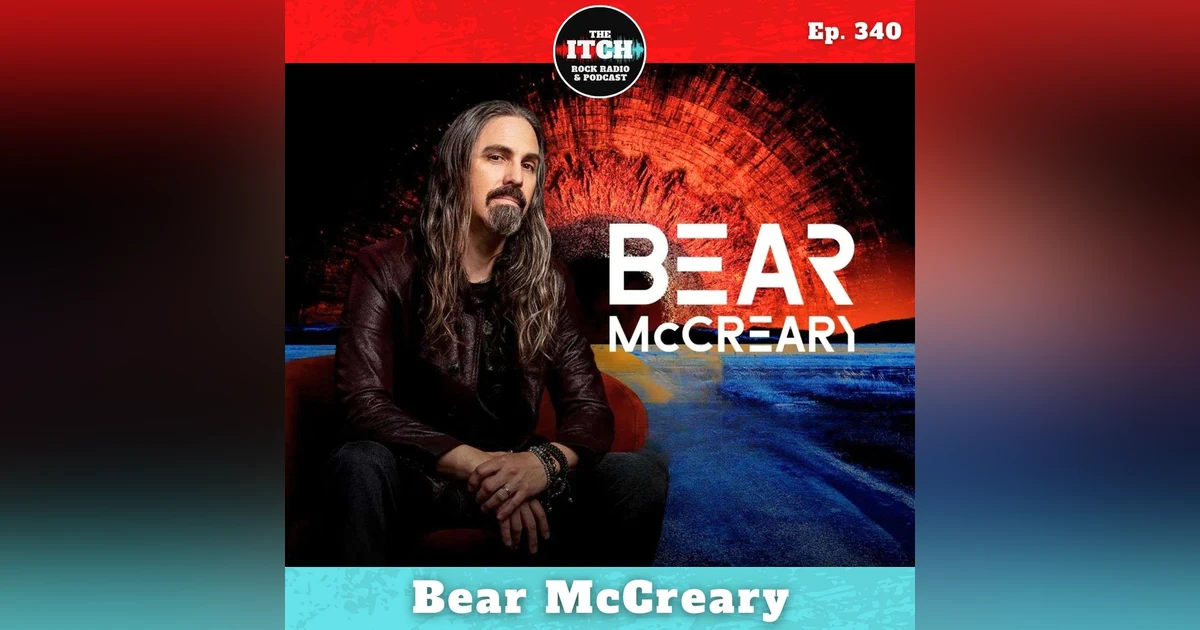
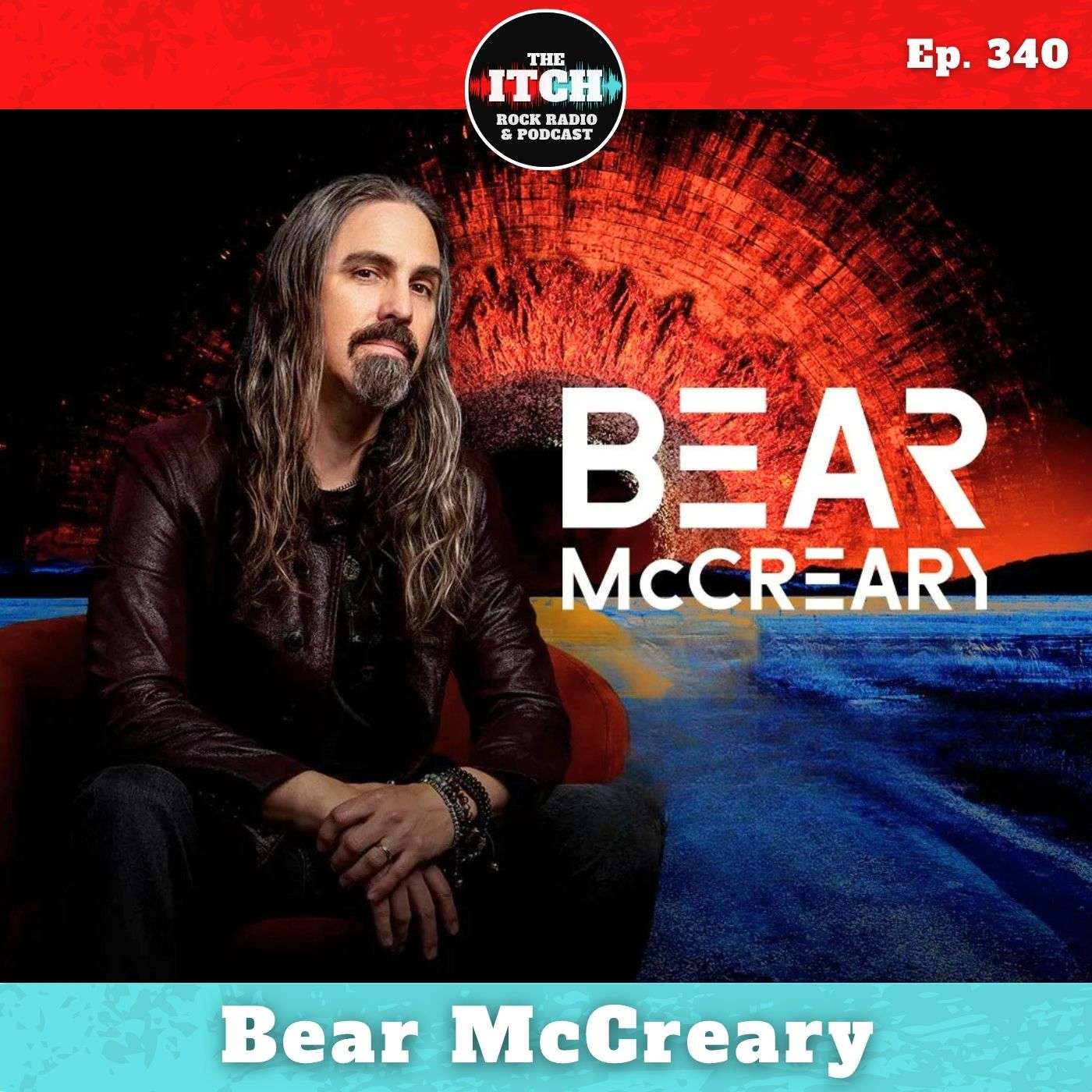
This week, we're scratching The Itch to get cinematic! Our guest, Bear McCreary, is the man responsible for scores of scores for films, shows, and games. He created music for The Walking Dead, Battlestar Galactica, Black Sails, Lord of the Rings: The Rings of Power, God of War, and literally 100 other projects. And somewhere in all that work, he also found time to assemble an all-star team of collaborators for his own metal albums, 2024's The Singularity and this year's The Singularity: Ekleipsis. The list of rock and metal royalty he's worked with includes Joe Duplantier of Gojira, Patrick Stump of Fall Out Boy, Claudio Sanchez of Coheed and Cambria, Slash, Chad Smith of Red Hot Chili Peppers, and Stewart Copeland of The Police... and those are just a few from the new album!
We had a blast talking with Bear about his successes and failures, his pinch-me moments, his favorite movie trailers, and just how he manages to balance family life and the creative projects he's constantly challenging himself with. He's full of insight, introspection, and great stories. You're gonna dig this one. Enjoy.
Listen to The Itch Rock Radio Show Rock with us every Sunday night from 6-9pm CST on KCLC-FM in St. Louis. Outside the area? Stream online at 891thewood.com, TuneIn, Radio.net, and OnlineRadioBox!
Connect With The Itch For any and all friendship, questions, inquiries, and offers of pizza, The Itch can be found at the following: Website: itchrocks.com Facebook: Facebook.com/itchrocks Instagram: Instagram.com/itchrocks Email: itchrocks@gmail.com
Support the Show Thank you so much for listening. If you like what you hear, please subscribe and leave a positive review and rating on Apple Podcasts, Spotify, or Podchaser to help our audience grow. Reviews only take a minute and help us reach more rock fans just like you.
Credits Our theme song, "Corrupted", is used with permission from the amazing Skindred. All other content is copyright of The Itch. All rights reserved, including the right to rock on.
Bear McCreary: Hey, this is composer and rock artist Bear McCreary, and you are listening to The Itch.
KC: You're listening to The Itch. My name is KC.
Dan: My name is Dan.
Aaron: I'm Aaron, and this week we're scratching The Itch to get cinematic. I love when we have these conversations where we can venture off into a kind of corner of the rock world that we don't get to very often. And today's guest is not from a band per se, but I would just about guarantee that you have heard some of his work somewhere. We got to speak with Bear McCreary, primarily a composer for TV, film, and video games. I know him initially from The Walking Dead, where he did work on that show for like 12 years. You may have also heard him on Godzilla: King of Monsters, Battlestar Galactica, Human Target, Black Sails, which has a freaking awesome theme song, The Lord of the Rings: The Rings of Power, God of War, and a few more that we'll mention in the conversation itself. So I'll, I'll save those for that. But man, the dude's done so many things. And one of those many things he's done now is create two metal albums featuring all-star casts from throughout the heavy music world.
Dan: Yeah, it was really funny when we were, you know, by the way, we just celebrated your birthday recently. When we were celebrating your birthday with friends and trying to describe this interview, it was really different from the normal interviews that we describe. Like, so what does this guy do? Oh, you know, you've heard stuff that he does. I assure you, you've heard stuff.
KC: Yeah.
Aaron: Yes, it was funny because when I saw the pitch email for this conversation, I saw the name. I was like, I recognize that from somewhere. And I'm pretty sure it was The Walking Dead title screen. And so I was like, hey, we'll read this. That's kind of interesting. And then I clicked the first link in the email for a song, and it was Black Box featuring Joe Duplantier from Gojira and the Bulgarian Women's Choir. And eight seconds into that, I was like, all right, yeah, we're probably gonna end up talking to this dude. So this album that he just put out, The Singularity: Ekleipsis, is just stacked with stuff that is heavy. And, again, I use the word cinematic. And just really fun stuff to listen to.
KC: The entire album is that way. And there's a moment for me listening through this album and then Kill Us Anyway came on. I was like, okay, that took a turn. But very enjoyable album.
Dan: And this was a fun conversation because it lent itself to talk about a variety of things and hearing incredible stories. And we even talked about his name. And I will say the one question that I wanted to ask, or I should say I didn't think of until afterwards, one of the things that, you know, pops in your head afterwards, like, has he ever had anybody come up and be like, I want to fight a bear? I'm just curious because, I mean, people are dumb. So I would imagine it probably happened once or twice.
Aaron: Have you ever been challenged to a fight by a drunk guy who thought he was clever?
Dan: Yeah, exactly. Trying to be funny. I can imagine it, probably because I would be that dumbass that would do it. I wouldn't fight him. I don't fight anybody, but I talk a lot of shit when I've been drinking.
Aaron: Fair enough, I guess. But to your point, we did get to talk about so many things that we— that aren't common topics in there. Like, we went into movie trailers and what makes a good movie trailer. And how when you're in his line of work and you're creating things for different people and different cultures, you have to be mindful of respecting the traditions of the different ethnic groups and whatnot that you're kind of— you're sort of representing in a sense with your music. So his stuff is just so fascinating. And honestly, I'm so glad that we got to do this one because it ended up being one of my favorite interviews we've done this year. He's an easy conversation. He has insight into himself and his process and the people around him and stories for days. And the number of people he's worked with— I didn't even name-drop the people that are on this album, but it's just— it's— we use the word murderer's row. It's a full who's who of rock and metal stars, and he's got stories in this conversation about a whole bunch of them.
KC: Yeah, I totally agree with everything you said there. And the one thing with this conversation. He just one of those people that brings an energy and a light to the conversation, like the entire conversation. Like, you understand how he can create music for 16 hours.
Aaron: You know, I think it's a lot of coffee.
Dan: Yeah.
Aaron: Well, if you are listening to this week of release, he does have some live dates along the West Coast, I believe.
KC: Yes.
Aaron: In early September. I'm not gonna lie, after seeing Hans Zimmer a couple years back, I now understand what a show by a heavy music composer looks like in a sense. And I'm sure theirs is different than his. It's not a direct comparison, but I want to see it now. I would love to see this guy live. So we're gonna keep an eye out for that. Look out for it on a Concert Catch-up someday.
Dan: Now that you mentioned that, it is very interesting how many composers are playing the live stage because Danny Elfman's been on a couple of festivals as well.
KC: Yeah.
Aaron: Oh yeah. And people get hyped just like they do for the big single that you knew from whatever year. When you hear that theme song from that thing that you love, people get excited. It's awesome.
Dan: Oh, I agree. Like, you know, it reminds me when you say that, like Breaking Benjamin playing their Halo 2 song every time. Like I hear that intro, I'm like, yeah. I get it. That's one of my favorites to see them play live.
KC: Yes.
Aaron: Everybody's thinking about how much they loved playing Halo, except for me. I sucked so bad at Halo.
Dan: See, I can imagine Bear is going to be amazing to see live.
KC: Yeah.
Aaron: So do check that out if you get the chance. We want to highly advocate for that. And this is a guy who's easy to keep up with. If you haven't heard some of his work yet, you will soon because he's doing a like five things at all times, so the resume grows exponentially.
KC: Yes. So without any further ado, here's our conversation with composer Bear McCreary.
Aaron: All right, so for listeners' sake, I'm not going to go through your entire resume right now, but just know that if you're listening to this podcast, you have almost certainly heard some of our guests' work somewhere in a film, a TV show, or a video game in the literal about 100 projects I counted of your work over the past 20 or so years. Somehow In all that time, you also assembled a who's who of rock collaborators for two metal albums of your own. The brand new one, The Singularity: Ekleipsis, is what brings us here to talk today.
Dan: When you're already scoring a half a dozen projects, how do you still look at your calendar and think, yeah, I have time for one more album?
Bear McCreary: You know, I thrive on multitasking. I think that's no surprise when you look at all the projects I've juggled over the years and, you know, two long-running projects I had. I was working on The Walking Dead for a dozen years and working on Outlander for a dozen years. And one of them is this grisly horror show set in the American South. And the other, I get to do sex scenes and use bagpipes in the music. So like, there is no way those wires are crossing, right? Like, I'm not going to accidentally put bagpipes into Walking Dead. So that's sort of where I'm wired. And, you know, truthfully, I think I reached a point after about 15 years of working professionally as a composer for film, television, and video games where I realized that there was— I was very grateful and remain that way. But there was something missing, you guys. There was something about my artistic life that was not being satisfied by writing music for other people's stories.
KC: Mm-hmm.
Bear McCreary: I mean, scoring projects for people is an art and it's a craft. Like, you bring me a story and I craft a score in response to it. So I think I wanted to challenge myself to really kind of fulfill that artistic itch that I think we all have when we get into music or any kind of art. You want to create, you want to know what you have to say. So it's not that I had time. I made time. I had to push some stuff aside, clear out space and say, all right, I'm going to write a rock song and that's what I feel like doing. Let me see where it goes. And then I did a few of those and I played them for some of the people that I know and that kind of started me down this path where I put out a record in '24 and the new one, as you said, just dropped in '26. And it's kind of become one of the main pillars of my creative life now.
KC: Awesome. This isn't directly related to anything else, but before we get too far in, I have to ask, how did you get the name Bear?
Bear McCreary: You know, it's— my parents were hippies and it's not nickname, right? I mean, like, yeah, I don't know, I'm like 5'6 and a half maybe. And I'm growing up, I was 120 pounds, man. Like, I'm really working at it now, and I'm working out a lot, and I'm taking a lot of protein, and I'm getting to like, you know, 165. I'm not a big guy is what I'm saying. So it's not a— it was just what my parents called me. So I didn't even realize for a long time that it wasn't a name like Bob or Dan or, you know, Robert or whatever. I was just like, oh. So there you go.
KC: All right. Had to ask.
Dan: I'm really kind of curious too, because I just recently started watching The Bear and now I'm wondering who dropped the ball not having you score that show.
Bear McCreary: Well, I don't know. Also, another pop culture bear, apparently the villain in Obsession is named Bear. And I'm like, what? No, no. Gen Alpha is going to associate my name with... Yeah, whatever. Anyway, look, it didn't hurt Mike Myers that he was named after a serial killer, so I guess it didn't hurt, you know?
Aaron: So, something that I find fascinating about your work is that it really pushes you to become a student of so many different things throughout history, throughout musical tradition, throughout mythology. And so as the story goes, you immersed yourself in things like taiko drumming for Battlestar and Norse mythology for God of War. I'm curious how you feel like that education for all these different projects has impacted your own personal worldview and philosophy.
Bear McCreary: I mean, it's a great question, and it is something that I learned from my mentor. When I was 16, I met Elmer Bernstein, who's one of the great film composers of all time, who had scored The Ten Commandments, The Great Escape, The Magnificent Seven, Ghostbusters, The Age of Innocence, on and on and on and on. So one of the things that he felt very strongly about was that composers needed to really do their research and make scores that, if they acknowledge some other cultural music or historical music, they should do it. They should know the rules.
KC: Mm-hmm.
Bear McCreary: And you hear that in so much of his music. And so it was a— it was something early on that I thought, oh, well, I want to know how to do that. I want to know how to, you know, when I saw Braveheart and Rob Roy and Highlander, I'm like, I want to understand what Celtic music is. And I wanted to reconnect with my own cultural heritage, both through the Scotch-Irish colors and through Armenian music, which very early on worked its way into my music. I've always had a value that you want to understand a culture's music or a musical tradition in a broader sense, because it's like a window into people you don't know and you become a better person if you understand it. Now, as an artist, am I following those rules all the time? No, absolutely not. I took Japanese Buddhist monks and had them singing for Rodan. Oh no, I'm sorry, they were Ghidorah. So I have King Ghidorah, you know, this three-headed monster from another dimension in Godzilla. Godzilla: King of the Monsters, and I was working with these Japanese monks, but I wanted to understand why they said what they said, what the chants worked, how they meant, so that I could learn something and turn it into something meaningful to the audience. So that's just one example. I mean, I think it does make you more of an open-minded, creative person, an understanding person, when you want to roll up your sleeves and learn how some other cultural music or musical tradition works.
KC: Is there a culture or musical tradition that you haven't yet gotten to explore that you'd really love to?
Bear McCreary: So many. I mean, there's just so many, you know what I mean? Like, I've done some stuff with Native American musicians. I would want to do something with haka from New Zealand. I would love to do indigenous South American music, which I did a little on a TV show called Da Vinci's Demons, where I wanted to reference indigenous music from Peru, not Peruvian music today, because it took place before the Spaniards arrived. So this is pre-Colombian indigenous music. And we brought singers down from the mountains into Lima, Peru, to sing their traditional music that predated that. I'm fascinated by all that stuff. With that said, giant disclaimer that I got to be really careful with those. And it's like, for example, Native American music. Boy, we're going off on a tangent. But Native American music, even that community doesn't see eye to eye. Is it okay for our ritual music to be used in a movie? Some people say it is, other people don't. So I'm treading very lightly in that world. There's some Native American hip-hop artists that I'm chatting with. Like, I would love to do something with them. I did a hip-hop song on a kind of hip-hop rock song on my last record, the '24 record, in Scottish Gaelic.
Dan: Mm-hmm.
Bear McCreary: And finding someone that can rap in Gaelic, like, I just think stuff like that is really awesome. So look, the world is big, man. It's vast. I do not think I'll run out of fascinating musical traditions and musical cultures before my time is done here.
KC: Fair enough.
Dan: I'm a huge fan of one of your most recent projects, Percy Jackson and the Olympians. With it being part of a Disney franchise, I'm really curious, how does the production of a show like that compare to the scale of something like Lord of the Rings?
Bear McCreary: It's interesting. I mean, they're both big in their way. I mean, Lord of the Rings: The Rings of Power is sort of bigger than anything else could be ever. Like, when it just comes to scale of production, it eclipses everything I've ever done and most things that I've ever heard of on TV. Percy also is for a younger demo.
Dan: Mm-hmm.
Bear McCreary: I think Rings of Power is for a wider demo, but it does skew a little older. And Percy, especially because our cast started so young, you know, like you watched Walker Scobell in the first season alone, he like grew a foot taller.
Dan: Yeah.
Bear McCreary: But yeah, I mean, with that, it's like the scale comes from wanting to create this big adventurous wonder, a tone that invites people of all ages to partake in the adventure. So it's big, but it's big in the way that's like, a little more like a storybook adventure is big. And Lord of the Rings is in a more mature kind of epic fantasy, more obviously like the films like The Odyssey. It's just a heavier material. Now it'll be interesting though, this season on Percy Jackson, our kids are getting older, stakes are getting higher. The events of the books themselves sort of followed the arc of the Harry Potter books where as the kids get older, the themes get darker. The show is darker. So I'm very excited to see what the response to the third season is and see what fans make of it. But I'm very excited about it.
Dan: We are too. Me and my kids love it. Well, my wife, my whole family.
Bear McCreary: How old are your kids?
Dan: 8 and 10.
Bear McCreary: It's perfect. It's perfect. Yeah. My daughter, I think, was 9 or 10 when the first season aired. And by complete coincidence, down the street, I mean, four houses down, used to live this family. The dad was a bass player, plays with Tim McGraw, a touring guy. His son played Luke on the show.
Dan: Oh, nice.
Bear McCreary: Just a total coincidence, right? And so I knew this kid, Charlie, growing up, and Paul, the bass player, texted me and he goes, hey, man, you should come over. Like, this was after the show had aired. Like, some of the folks are here, some of the cast are here hanging out. And I was like, can I bring my daughter? And he goes, yeah, yeah. So I grabbed my daughter, I go, hey, let's walk down the street. And she's like, what? I go, walk down the street. Come on. We walk down four or five houses. The entire cast is there. And she is so starstruck. And they were so sweet with her. They're like, Sonatine, let's take a picture, you know? And it was just like, I think I was like, oh, you guys were so cool. They fully understood the assignment, right? I walk in with this little girl. So that was like the— I was the coolest dad ever, right? And then, their family, Charlie's moved out now and they've moved away. So I don't get that experience anymore. But that was one of those crazy, living in Los Angeles coincidences. Like, what are the odds of that?
KC: Yeah.
Aaron: Yeah, that's awesome.
KC: Dan's kids were actually excited that Dan was getting a chance to chat with you.
Dan: Yeah.
Bear McCreary: Oh man. Well, tell them I think they're gonna like the new season.
Dan: Agreed.
KC: Yeah. When you're constantly writing for different projects, how often do you find yourself fitting something that you've already created or worked on into a new project versus having to start completely from scratch?
Bear McCreary: Um, that happens almost never. I could count on one hand the number of times that happened. It's the other way around.
KC: Okay.
Bear McCreary: There are so many ideas for a film, television show, or video game that do not make the cut that I end up turning those into songs on my rock albums. Part of the way that I start both these records, although particularly the first one, because I just was sitting on so much great music, like the song End of Tomorrow that featured Slash. That was something I was kicking around for a movie that didn't go anywhere. Industrial Revolution with the lead singer from Ozomatli. That one was one. There were a couple others where it's like, man, that riff is really cool, or that orchestral part is really cool. And it's like, I guess it's going nowhere. It's hard to fit it into another movie or show. But to turn it into a rock song, well, suddenly I can do that any way I want, you know. So that's one way that I have found my two careers kind of overlap. But the odds that I've written something in the past that didn't work then and will work now for some new thing—almost never. I'll give you an example of when it did work. There's a new game coming out called God of War: Laufey. Trailer just dropped. You can hear snippets of the theme in there. And the theme for Laufey is actually a repurposing of a theme for Atreus that didn't work in God of War: Ragnarok. And I thought I could do something else with it. It just sat there burning a hole on my hard drive like, damn it, you know? And why didn't it work in God of War: Ragnarok? It was too adventurous and upbeat and inspired by fantasy, like '80s fantasy, like Willow and The NeverEnding Story and Ladyhawk and all that kind of crazy stuff. And it just wouldn't fit in God of War: Ragnarok. So when it came time to work on God of War: Laufey, and now it's like, look at this environment. We are in this crazy fantasy environment. I was like, hey, I don't know, maybe this is nuts, but everything that made that theme get thrown out maybe is going to work well here. And I ended up repurposing it substantially. So there's one example of what you're talking about, although it's within a franchise.
KC: Yeah, that's why I was curious about it.
Aaron: You kind of got me wondering about something, before we get more directly into the album, because you're mentioning trailers and things like that. As somebody who, no doubt, anytime they see a movie or a show or even a trailer, the music is what's probably standing out first. What's your take on what I would consider has become a trend, maybe to the point of being a crutch lately, of movie trailers taking like a classic '70s, '80s, '90s song and doing like a slowed-down version of it as part of the trailer?
Bear McCreary: I think it's played out, as most trailer clichés are. When I was growing up, the cliché was—what was his name? Don LaFontaine going, in a world.
KC: In a world.
Bear McCreary: I mean, it's the same thing, right? I mean, I can't say that trailers now are worse than they used to be. No, I mean, I think it's kind of lame. But I gotta also be real that like one of the first trailers to do that successfully was 2016's 10 Cloverfield Lane, which was a film that I was involved in. So I can't be like, I would never work on a film with a trailer like that. I will say, just when I think about the best trailers ever, The Phantom Menace, easy. Easy top 5. The way the text played out, the way the images played out. Actually, Force Awakens too. Good Lord, what a trailer. But another one that stands out to me that they just don't make them like that anymore was Spider-Man 2, the Sam Raimi film, which just showed a scene. It just showed a scene where he's sitting there with MJ and you're just like, oh, it's them. And wow. And then the car comes through the window. I'm getting chills thinking about it because it was just like the first time I saw that trailer. Like, especially knowing how many incredible shots that movie had and they're like, start with MJ and Peter in a cafe. That took some stones to do that.
Aaron: I love it. Well, I'll get back on track because otherwise I could spend the rest of this conversation just talking about Spider-Man related things and we don't—
KC: All right.
Aaron: All right. Not today. Maybe another day.
Dan: Not today.
Bear McCreary: Next time we'll come back. We'll do the deep dive.
Aaron: Just do a Spider-Man deep dive.
Bear McCreary: I'll do it. So like, real quick though, like a tangent.
Aaron: Yeah.
Bear McCreary: And I'm going to stealth move to my album for you. But when I started working with Patrick Stump from Fall Out Boy on my new record, he's on a song called The Chandelier. All we talked about was Spider-Man for like hours, Marvel and DC stuff, because he's a composer. I mean, really, he is such a kindred spirit. He scored that Spider-Man show for Marvel. He's done a Batman show for DC. And when I heard his Batman music, it was actually when he really popped on my radar where I was like, wow, this guy understands Batman: The Animated Series and Danny Elfman and Shirley Walker. And so we got on the phone and we were chatting for literally like three hours. And then he was like, yeah, man, I got to go. And I go, yeah, by the way, do you want to sing on my record? He's like, yeah, I'll do it. But It's like those kinds of nerdy connections are part of what I've found in the rock world, because everybody that's good in rock, they're nerds.
KC: Yeah.
Bear McCreary: You can't become good, really good at something without being a nerd for that thing. So like talking with Slash and it's like you just talk about horror movies for two hours or even just the way he approaches his playing. You're like, this guy's meticulous. This is a guy that spent his youth practicing. And it's like, I can so relate to that. So it is funny how I started hanging out with rock stars, but realizing like, oh, you guys are all comic book nerds or movie nerds or music nerds just like me, you know? So it was very validating.
Dan: Or sports nerds. That also happens a lot too.
KC: Yeah.
Bear McCreary: Yeah, totally.
Aaron: We've definitely learned that in our conversations.
KC: Yeah.
Aaron: So, as you kind of noted earlier, you've spent your career making music mostly in service of other people's stories. And these Singularity projects, the first one in 2024 and now this one, you're telling your own stories. So I'm curious, what is the idea behind Ekleipsis, like even the name? And what did you want to kind of try to communicate and say on this album that you really couldn't whenever you're speaking through someone else's voice?
Bear McCreary: Yeah. I mean, the first record, I was saying a lot, and we crafted a graphic novel out of all these disparate stories with the same name, and we published through Image Comics. There really was a narrative there, and it's a lot. It's a lot. It's a long record with a lot of crazy stuff on it. The second record started off even bigger. I say this with self-critical pride that on the first Singularity, I think there were 24 or 25 songs. Guys, I think I wrote like 27 songs. With Singularity: Ekleipsis, there are 14 songs, 15. I wrote 40.
KC: Oh, wow.
Bear McCreary: So I wrote so much more. It was so much bigger that actually when it was time to stop the generative period and start working on honing the record, I had to do it because I literally couldn't hold it in my brain anymore. It was too much. So I took 25 songs and just 30 songs. All right, you're going into deep freeze. These are the ones. I picked these ones. The reason I say that is that there was this odd similarity. There was this connection. All of them were about in the most sort of general sense, dealing with adversity. But many of them were about dealing with the repercussions of the fall of our society, even ones that we didn't—they just all started coming out this way. Like when we were writing Black Box with Joe Duplantier from Gojira, his words just started pouring out and we were like, man, that's really powerful. And this is how we're all feeling. We're all feeling untethered and a little powerless. And, you know, Brendan, my brother Brendan and I wrote Kill Us Anyway, which is just like—it's almost like a Rage Against the Machine song from the early '90s in its verses. But then unlike a Rage Against the Machine song, the chorus is just like so sad. It is so like if you—that song, that's the darkest song I've ever written, right?
Dan: Yeah.
Bear McCreary: And, and then even with my wife, Rhea, we wrote Alexandria, which is about the Library of Alexandria. Spoiler alert—doesn't have a happy ending, you know? So Ekleipsis is a word that I found that in ancient Greece, not Greek, ancient Greek, it meant like abandonment. It was the—it meant like, like the disintegration of things. And it's the source of the word eclipse, which is sort of what my cover art from the last record was. I was just like, I got chills when I found this word. I was like, oh my God, that's the word that kind of encapsulates this record. So it is a more traditional record in that it's a concept album in that it's not a narrative. It's not like—it's a little less like the '24 album and it's a more perfect example. The '24 record, I'm tipping my hat to The Wall. It's a story. And this record is more like Dark Side of the Moon, where it's a concept. It's like there's a vision for what all those songs are. I'm not saying I'm anywhere near as good as that record. I want to be—I want to aspire to be in the shadow of that record on its worst day. But anyway, that's sort of where I landed.
KC: I'm glad you brought up your brother and your wife because we love that not only do you have a murderer's row of huge rock names on this album, but you also have your family.
Bear McCreary: Yeah.
KC: Brendan does vocals on multiple tracks and he's so diverse in what he can do. I feel like he could carry the whole album himself and you didn't even need any guest vocals.
Bear McCreary: I mean, that's true. And what's great is that because he's in the family and part of the core band, like, he is who you see when we go out on the road.
KC: Yeah.
Bear McCreary: You know, we're touring September 8th through 18th on the West Coast out here. And when you have guests that include Serj Tankian from System or Claudio Sanchez from Coheed, I've already mentioned Patrick Stump and Joe Duplantier. Jens Kidman from Meshuggah, Rufus Wainwright on the first record. Like, I love these songs and want to be able to perform them in addition to the ones that Brendan sings lead on, and he makes that possible. I mean, really, like, the band that I tour with, just to sort of zoom out, they're so good. My drummer Gene Hoglan is one of the greats from Strapping Young Lad and Testament and Death Clock and Dark Angel. My guitarist, Omer Bensvi, he's the guy that I'm like, Omer, you got to learn that Guthrie Govan solo. Omer, you got to learn that Steve Vai solo. Omer, you got to play that Tim Henson part. And he's so soft-spoken. He's like, yeah, okay, okay. And he does. It's so funny. And he's got a couple of great solos on the record. Our Kingdom is him and The Chandelier is him. So yeah, it is like a murderer's row of talent—vocal, guitar, even a couple of drummers, Stewart Copeland from The Police and Chad Smith from the Chili Peppers, in addition to Gene doing all the others. But that's what makes it so fun, and that's why I think the album experience is so—it's like visceral and dynamic. And when you come see us live, you get that experience. Even though not every time we have, we don't often have the guests with us, although at Wacken we did. Alissa White-Gluz came out and performed Our Kingdom with us in Germany. So it just depends on who's in town, you know?
KC: Yeah.
Aaron: I definitely want to come back to the live question because I have many questions, including can we get some Midwest dates at some point, maybe in 2027? But we just talked about your brother. Like you also said, your wife is on the track Alexandria. So with both of them being on this album, are there any different challenges in working with family as opposed to working with these other guests?
Bear McCreary: I mean, there are always different challenges in working with your family, you know what I mean? Like, yeah, yeah. It's one of those things where you have an increased shorthand in communication, which is wonderful. But it can be tough. It can be tough. I think that the reason that my brother and I and my wife and I, there's like, if you picture kind of a Venn diagram, our interests overlap, the circles overlap, but not a lot, my brother and I more than my wife and I. So that it's always sort of clear what the— you sort of have to go into these things and go, okay, who has veto power, you know what I mean? In this scenario, I might help my wife do some string arrangements on a musical she's written or whatever, and it's like she has the veto power. On Alexandria, it's like, yes, it's a collaboration, but it's also I'm trying to fit it into my metal record and that kind of stuff. You know, with my brother, he's a producer on the record as well. So even songs he doesn't sing, he's intimately involved in. And one of the ways that we've made that work is just I try to— I'm very fast with making demos. Because that's where my film stuff, my film and TV training kicks in. So my policy tends to be like, even if I don't agree with an idea, just do it. Like, if he says, man, I don't think that chorus is any good, I think that he'll say things like, the chorus should be the bridge. You need to write a different chorus. Or often case, like, it's just heartbreaking to hear it. It's like, these are two songs. Like, that's cool and that's cool. They're just fighting each other. And I can sit there and argue with him, or I can say, fine, I'm gonna split them off. And if we end up with two better songs, that's great. Or if we end up with two worse songs, then at least we've tried it, you know?
KC: Yeah. Yeah.
Bear McCreary: So that's where I've found, like, if you could boil it down to a platitude about collaborating with people in your family, though, just anybody, it's like, it's better to try it than to argue about it.
KC: Yeah.
Aaron: Yeah.
Dan: When you're writing a song, do you already hear a specific artist's voice in that sound or on that part, or does the collaborator kind of come later, more organically?
Bear McCreary: It goes both ways. Like the sketch I started that I eventually sent to Joe Duplantier, I wrote imagining Joe Duplantier. The Patrick Stump track, The Chandelier. I didn't imagine him at all. It was something we were kicking around, and I sent him a bunch of songs, and he picked that one, which is the one I was hoping he would pick. And then he brought this power pop punk energy to a song that was— It's weird. It's a weird song. It's very, very exciting with him singing it. But that's one of those surprises, you know, like, wow, wasn't picturing that at all. So it just depends. It really depends on when and how I meet an artist. I always try to have a song in my back pocket tailored for somebody. For example, when I worked with Stewart Copeland, I had like written the thing that was, you know, kind of Stuart Copeland-y, sent it to him and he was like, he was like, hey man, I got to say, like, I am the last person you want to play on your song. Like, I'm never going to play the same thing twice. I'm not the guy to do that. And I was like, what do you want to do? And he's like, I just love, you know, exploring and playing around with stuff. And I was like, Can my brother and I come over and just jam with you? And he was like, yeah, I'm totally down for that. And I go, okay, we're coming over. And that's what happened. And we wrote that song with him. So you can see how writing something as a way to like, hey, do you like this? It's just an icebreaker that ended up in the trash and we ended up with something 100 times better co-writing it with Stuart. So it just depends. what the core inspiration for an idea is. But I generally try to just write something, whether I imagine an artist on it or not.
Dan: Has there been a guest you wrote for that was not available? And then how did that change the song?
Bear McCreary: Oh, my, my list of rejections is lengthy. Some of my, some of my proudest achievements are just like, as a rock artist, I got an email from one of my heroes saying he didn't vibe with the song. You guys, I'm gonna cry. Like, wow, I got an email. And then another one where he said he was busy. Like, that's incredible. There's definitely ones where then you go, okay, well, I sort of wrote with one person in mind and then got to that person and then it didn't work out. So I'll put it on ice or recontextualize it, repurpose it. For example, good example of this, I was talking with one of the artists I really wanted to work with from day one was Claudio Sanchez from Coheed and Cambria. Just an amazing artist, amazing band. They do sci-fi graphic novels. I mean, when you stop and think about it, it's like they check a lot of boxes for me. And I wrote this song and that I just thought, oh, Claudio is going to kill it on this. And it didn't work out. The communication kind of went on ice. And this is on my first record. I sent that song to Rufus Wainwright, like one of the coolest art pop— like, I don't even know what category you put Rufus in.
KC: Yeah.
Bear McCreary: But Rufus in this house is like a god, you know what I mean? Like, what a songwriter. What a singer. Not a metal guy, you know. So here's this track with like Gene Hoglan double kicks and like a huge Guthrie Govan guitar solo. But what it had, because I was thinking about Claudio, was this beautiful melody. And I was like, Rufus, what do you think of this? And he goes, oh, that melody's beautiful. I could sing that. I could sing that. And I go, yeah, I think you could actually. We reshaped the song around him And then Claudio came on board for the second record. And, you know, at one point he was like, oh man, sorry it didn't work out timing-wise for that first one. And I go, dude, it's awesome. Thank you. I got this incredible Rufus Wainwright, once in a lifetime Rufus with blast beats collaboration. Like, things work out the way they're supposed to work out.
KC: To your point about the email, you've worked with an absurd number of legendary musicians at this point, and worked on so many big projects that a lot of people are already familiar with your work. But do you have a personal favorite holy shit, so-and-so knows who I am moment that sticks out to you?
Bear McCreary: There are so many, you know, like I'm so grateful for having crossed paths with all these people. I mean, I still think that, like, I'll tell you the moment. I'll tell you the moment. Okay. I was on tour for the first time last year. I'd never toured. I've done tons of concerts and played in bands, but I'd never toured. I'd never slept on a bus, never done four shows in four countries, four nights in a row. So I'm sitting in a cafe in Prague or something. I'm totally just delirious and exhausted and I'm just like, fuck, this is crazy. How am I going to survive this? How am I going to do this? Who can I even talk to about this? And I was like, oh, let me open up my text thread with Slash and Duff. Guys, like, how's it going? Where are you guys? What do you do when you have a sore throat? And what do you do about laundry? And they're like, oh, hey, man. Yeah, yeah, yeah. Here's— this is the trick. Duff's like, get a vodka bottle and put it in a spray bottle, and then you'll just spray your clothes down. Like, oh, this is great. And Slash is like, yeah, you know, careful on your voice and careful about meet and greets. And I'm like, oh, this is all great. And we were texting back and forth and then they're like, oh, we got to go. We're about to go on stage in Korea or whatever. That moment when I was like, I just got helpful tour advice from people that I realized, like, who are my friends that I can talk to about this? And when you go like, dude, 12-year-old Bear, what would he think of that?
KC: Right.
Bear McCreary: Good Lord. Good Lord. Right. I just— I mean, I'm— I mean, look at my shirt, man. I'm still— I'm still not over it. You know what I mean? Yeah, I'm still not over it. But that's the thing that is most moving is not like I got to meet so many of these people, but I get to sort of have an intimate working relationship with them and make music with them and have honest conversations about life in the arts. It's rough out here, man. That has been— I did not intend that at all when I started working on a rock record. Not at all. I was not expecting to sort of overhaul my social-emotional life, but I kind of did. And it's been great. It's been wonderful.
Dan: Awesome.
Aaron: So a little bit touching on that, you said earlier that when it comes to The Singularity: Ekleipsis, I made time for this. You know, I've heard you talk before about how you spend 16 or so hours a day maybe in the studio, and even the direct quote, which I love, which is that my talent is my work ethic. And so that got me thinking, after this many years doing this stuff, what do you feel that you understand about your own creative process now that you didn't 10 or 20 years ago?
Bear McCreary: That's a great question, and I'm still in the process of figuring it out. I think right now, this year, like this today, this morning, the things that I'm grappling with are more about like the balance between my creative life and my personal and family life.
KC: Mm-hmm.
Bear McCreary: I don't even quite know how I would have done anything different. when I look back at my 20s and 30s, I made a real investment. I invested the first part of my 20s in Battlestar Galactica. That was my graduate degree. That's what I did for like five or six years. Now, especially that I have kids and they're getting older quicker and I'm trying to make sure that I'm putting all my time in all the right things. And I know how to score a film and I know how to write a rock record and I now know how to go on tour. I mean, my daughter's 12. I still don't know how to be a dad. You know what I mean?
KC: Yeah.
Bear McCreary: Like, every year it's like, oh, this is totally changing. So those are the things that I'm thinking about. Like, how does my creative life impact the other one? And, you know, part of what I'm leaving behind for my kids, or like the memories that I'm giving them, and also like this body of work that they can sort of discover later. Last night I showed my kid 10 Cloverfield Lane, and I showed her a movie I did called Colossal with Anne Hathaway and Jason Sudeikis maybe a week earlier. And it was like, it was very moving for me. I haven't seen these movies in a decade. watching them again with her, you know, and realizing that she's like, oh, like, this was a cool movie. Like, this is now kind of part of her thing. And it's like my music is part of that. And all those hours that I put into it back then are now resurfacing in this other way that I want to take advantage of sharing it with her. So that's a long-winded way of saying, I don't know, man, I'm still figuring all this stuff out.
KC: That's really cool though.
Dan: Yeah.
Aaron: Pivoting back to one thing we've touched on earlier, because I want to make sure that we sell this, because even though we haven't seen you live, I have no doubt that this would be a very fun experience. So you mentioned you have these upcoming West Coast dates in September. What does a Bear McCreary live show actually look like? Are you pulling from all throughout your career? Are you sticking to Singularity? Is it like a metal band? Is it a whole orchestra? What's going on out there?
Bear McCreary: Well, it depends on which context. This tour, it is my rock band.
Aaron: Okay.
Bear McCreary: But we are doing songs from throughout my career, and we're doing songs from my rock records. So you're gonna hear God of War and The Lord of the Rings: The Rings of Power, Battlestar Galactica, Walking Dead, Godzilla, all filtered through this rock lens.
Dan: Hmm.
Bear McCreary: I'm bringing an amazing violinist and singer out with me named Johanna Kirkkela. She's from Northern Europe, and she is able to play a lot of my themes. I mean, you hear her play that opening bit on Walking Dead. And so there is this symphonic element in it. It's very cinematic, symphonic music. But it's loud and epic. And, you know, it's like I've got Gene Hoglan, one of the most famous metal drummers of all time, and we're playing God of War. Like, you know, if that is appealing to you, right? Like, if that sounds like fun for you, then you're going to have a great time. It's really— it's— the musicianship is insane. And being able to weave together an experience playing all my favorite stuff that I love to play and that I'm so proud of having written. it's a pretty unforgettable experience and there's very little like it out there. I think it's a really unique experience and people have a blast.
Aaron: I'll be looking forward to whatever opportunity we can find to do that. I know it's one of the million things that you're trying to juggle with your schedule, as you mentioned, but yeah, if we find some Midwest dates, we'll be looking into that.
Bear McCreary: We'll get back out there for sure. Do you guys have like 15 questions I haven't answered?
Dan: No, no.
Aaron: Well, what we have left is a series of questions that we pick from for everybody that we talk to. They're their own unique category.
Bear McCreary: Like a lightning round.
Aaron: Sort of, yeah.
KC: Yeah.
Dan: So the one that we always ask everybody is, what is a song or an album that changed your life?
Bear McCreary: So many. God.
KC: Top of mind.
Bear McCreary: I mean, the first thing I just keep thinking is The Wall. It was also a film that— it's significant because I grew up listening to film music. I didn't grow up listening to rock, pop, metal, hip-hop, vocal music. I listened to film music. And part of my journey to realizing how expressive and dynamic rock could be was discovering The Wall, the Alan Parker film. So that, that's why that record is so foundational for me, realizing like, oh, it's film music, it's a film soundtrack. in a way, you can sort of see how, like, yeah, that's— that was Bear's crossover, you know, to get from this side of town to the other side of town.
Dan: Nice.
KC: What's a filmmaker that you want to score something for?
Bear McCreary: Man, so many. So many. I mean, like, I grew up absorbed in Steven Spielberg and James Cameron. Sam Raimi, Peter Jackson. You know, I got to work indirectly with Spielberg when I scored a movie for Amblin, The Last Voyage of the Demeter. It was a cool horror movie and actually got to meet him on the set of a Cloverfield movie. J.J. Abrams introduced us. So at the very least, I was able to confess to him that in the score of that movie, I was like blatantly borrowing something John Williams did for Minority Report. Those are the type— look, but the thing is, like, those are the dreams, but they have their composers and their way of doing things. And like, really, when you talk about early Spielberg, early Sam Raimi, early Peter Jackson, early James Cameron, like, what do they all have in common? Like, these are directors that came that appear to come out of nowhere. But when you look at their roots, it's like Duel, like even Piranha 2 and James Cameron's concept art, you know, Dead Alive, Evil Dead 1. You're like, it's all there. It's all there.
KC: Yeah.
Bear McCreary: So I'm always on the lookout for young filmmakers. I never care about budget or anything. It's like people with short films, like people that have a vision. So it's like, how does that dream materialize in my actual career is I'm always on the lookout for filmmakers that like, well, like Dan Trachtenberg who did 10 Cloverfield Lane. He made a video game inspired fan film before that. And JJ saw it. I saw it and I was like, oh my God, like this guy's amazing. So anyway, those are my four picks.
Aaron: I love that, We like to kind of end on notes like that to put something out there and, you know, in case this gets in front of some ears that could— Sometimes stuff just happens, you know? You never know when you can be the conduit for that.
Bear McCreary: You never know.
Aaron: Bear, thank you so much for joining us. This has been a blast. We'd love to run it back sometime. Obviously you've got so many things that we could have 15 more questions.
Bear McCreary: Yeah, that sounds great. Well, thanks. And I appreciate that you guys did some homework and you bypassed all my usual stories and kept me on my toes.
Aaron: I'm proud that we pulled that off. This is a good group effort by the four guys in this room.
Bear McCreary: So nicely done, gentlemen.
Aaron: Nicely done.
Bear McCreary: I'm looking forward to doing it next time.
KC: All right.
Dan: Thank you. So thank you very much for listening to The Itch Podcast. My name is Dan.
KC: I'm KC.
Aaron: I'm Aaron.
Bear McCreary: And I'm Bear McCreary.
Dan: And until next time, raise your hand if you've been infected.
Aaron: If you enjoyed what you heard in this episode, please subscribe and tell a friend about The Itch.
KC: Check out the show notes for links about the episode, as well as our new music playlist and where you can hear us every Sunday night.
Dan: And you can interact with us at itchrocks.com or on Twitter, Facebook, Instagram, and Gmail, all at Itchrocks. I-T-C-H-R-O-C-K-S.


